Frequently Asked Questions
What is a Final Year Project (FYP) or capstone in BSIT?
In Philippine BSIT (Bachelor of Science in Information Technology) programs, the Final Year Project (FYP), also called the capstone project, is a graduation requirement where a small team of students designs, builds, and defends a working software system. The project must solve a real or realistic problem, use the languages and tools taught in the curriculum, and be documented in a 5-chapter manuscript (Introduction, RRL, Methodology, Results, Conclusion). Defense is a 30 to 60 minute live presentation in front of a 3-person panel who can pass, conditionally pass, or fail you on the spot.
How do I choose a capstone topic in 2026?
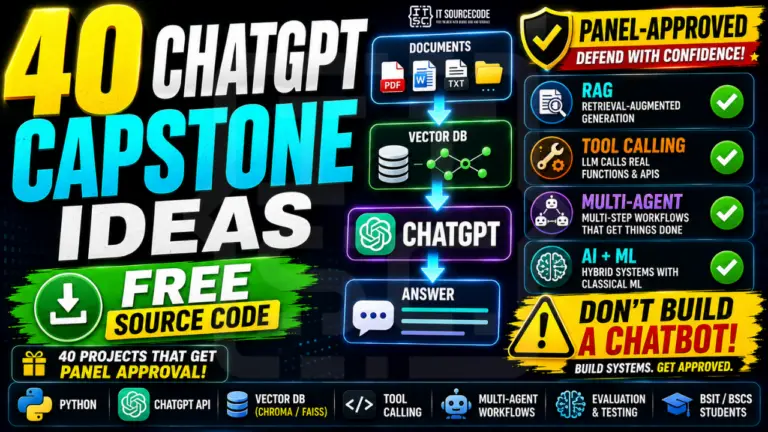
Pick a topic that satisfies three constraints at once: (1) you can finish it in the time you have left (typically 1 to 2 semesters), (2) it solves a problem your panel can verify is real (a barangay system, a school enrollment tool, an inventory tracker for a local store), and (3) you can defend the technology choice. Trending angles in 2026 include AI-augmented systems (face recognition, chatbots, recommendation), GCash and Maya payment integration, eGov.ph and DICT-aligned barangay or LGU systems, and Data Privacy Act (RA 10173) compliant record systems. Browse
our 150 capstone project ideas for a curated starting list.
How long does a BSIT capstone project take from start to defense?
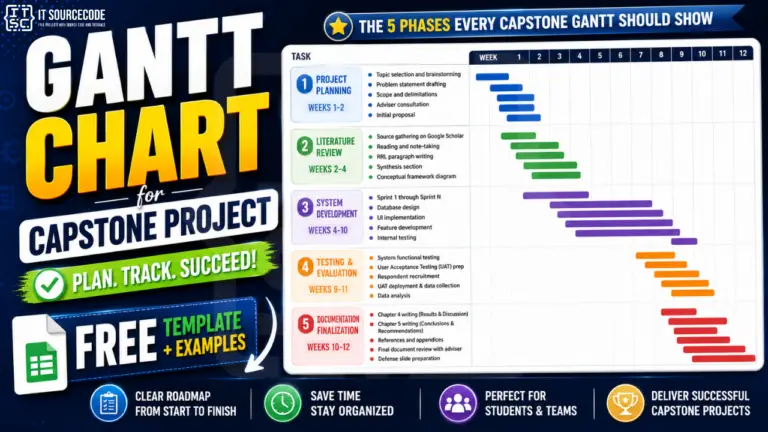
Most Philippine BSIT capstones run across two semesters (about 8 to 10 months total). The first semester is dedicated to Chapter 1 (Introduction), Chapter 2 (Review of Related Literature), and Chapter 3 (Methodology with UML diagrams) plus a working prototype, ending in a Title Defense or Proposal Defense. The second semester is full system development, Chapter 4 (Results and Implementation), Chapter 5 (Summary, Conclusions, Recommendations), and the Final Defense. Realistic effort: 8 to 15 hours per week per teammate. Teams that wait until the last 2 months almost always fail.
What goes in Chapter 1, 2, 3, 4, and 5 of the capstone manuscript?
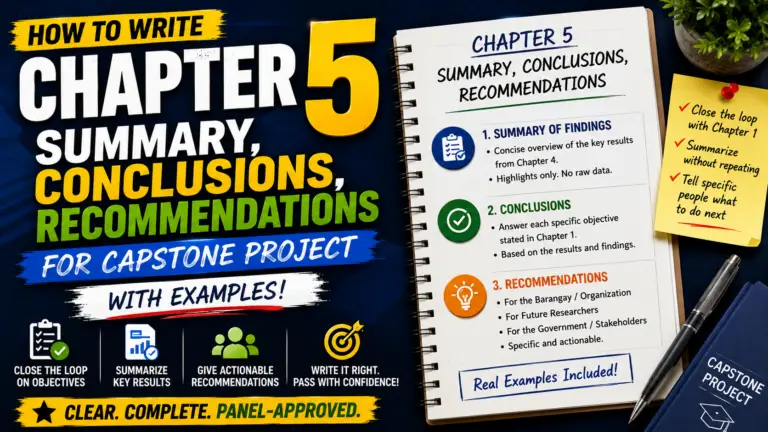
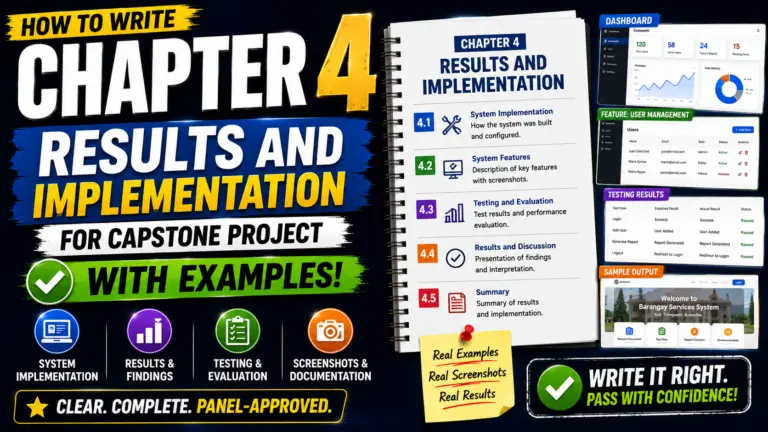
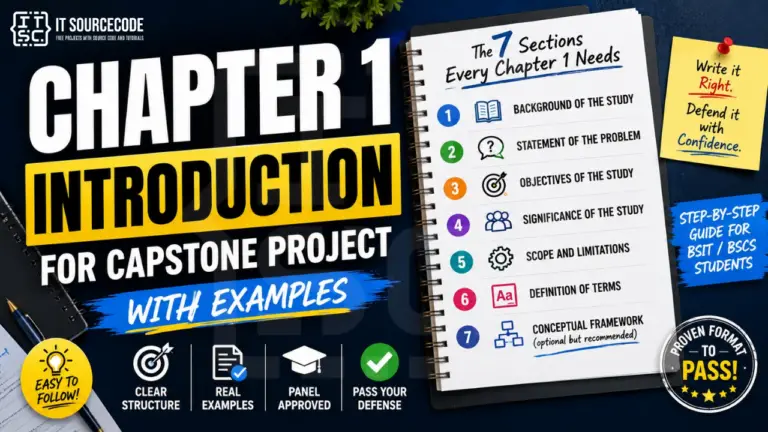
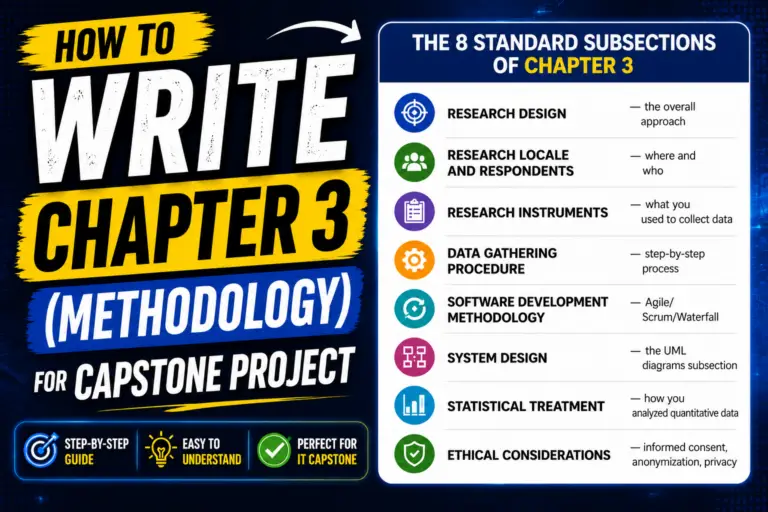
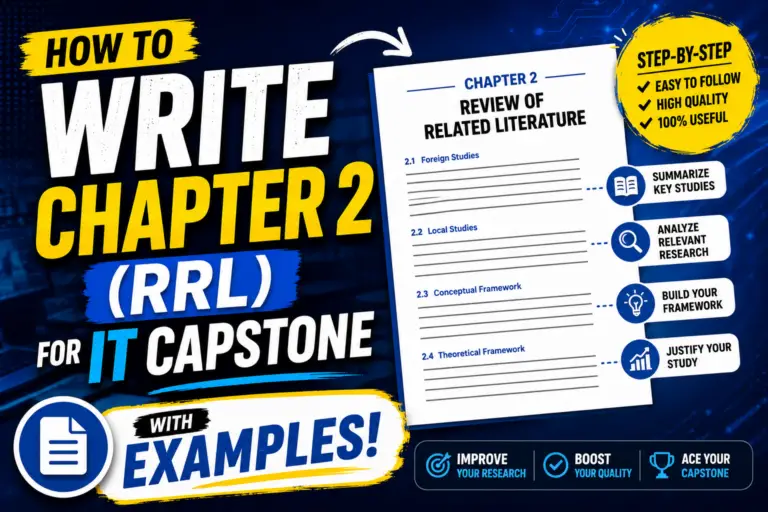
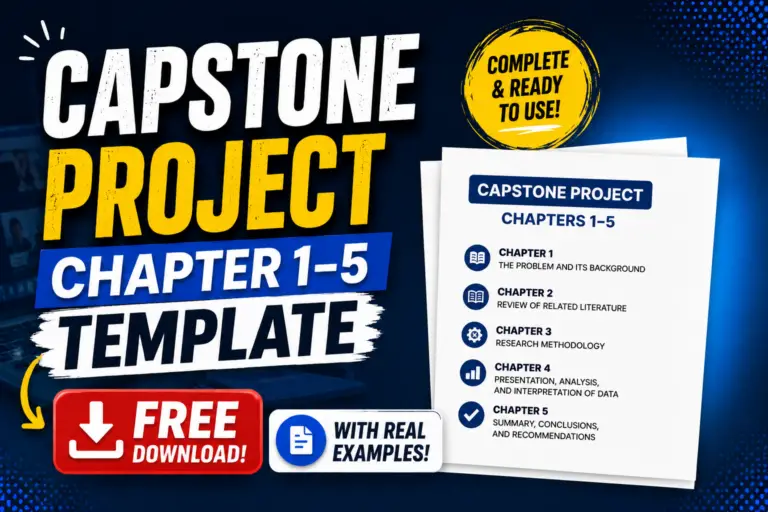
Standard Philippine BSIT format: Chapter 1 (Introduction) covers background, problem statement, objectives, scope, and significance. Chapter 2 (Review of Related Literature) reviews 15 to 25 related local and foreign studies. Chapter 3 (Methodology) documents the system design including UML diagrams, the development methodology (Agile, Waterfall, Iterative), tools used, and respondent profile. Chapter 4 (Results and Implementation) presents screenshots, user acceptance test results, and statistical analysis. Chapter 5 (Summary, Conclusions, Recommendations) wraps up with what you achieved, what limitations remain, and what future researchers should do next. Total length is typically 80 to 150 pages.
Which programming language and framework should I use for capstone?
Match the language to your panel and your skill level, not to what is trendy.
PHP plus MySQL is the safest choice in Philippine schools: every panel has seen it, hosting is cheap, and there are hundreds of working capstone examples.
Python with Django is strong if your project includes AI or machine learning.
Java with NetBeans is preferred by panels focused on OOP discipline.
VB.NET works for desktop-only capstones (clinics, kiosks).
Laravel is the modern PHP upgrade if you want to impress technically-strong panels. Download a starter from our
Free Projects library, then extend it with your original module.
What happens at the capstone defense and how do I prepare?
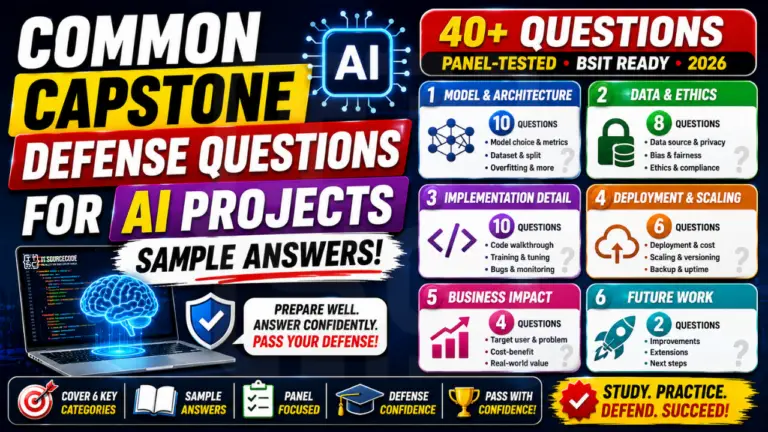
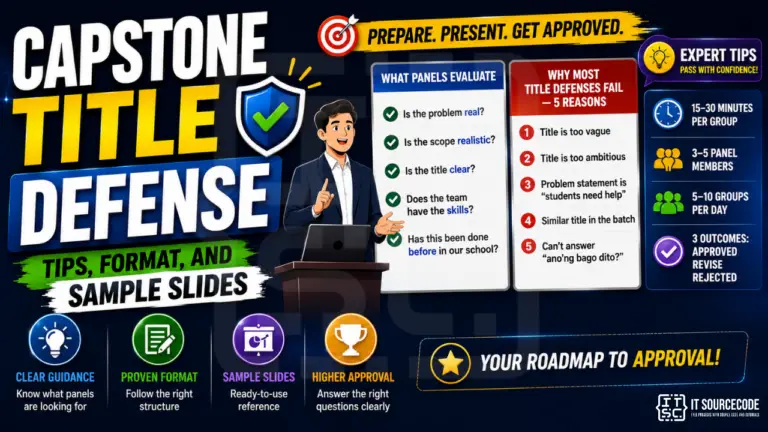
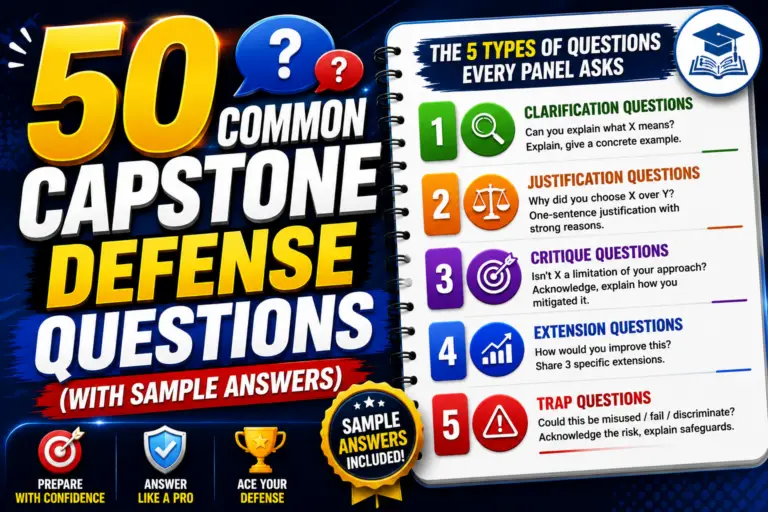
A typical Philippine BSIT capstone defense runs 30 to 60 minutes: 10 to 15 minutes of team presentation, 15 to 30 minutes of panel questions, then 5 to 10 minutes of deliberation. Panels test three things: do you understand your own code, can you defend your design choices, and can you handle edge cases on the spot. Prepare by (1) being able to explain every UML diagram in plain Tagalog or English without notes, (2) running a live demo with at least one happy path and one error case, (3) anticipating the 10 most likely panel questions for your domain and rehearsing answers. See our
defense preparation guides for chapter-by-chapter rehearsal scripts.
Why do BSIT capstones fail and how do I avoid the common pitfalls?
The five most common failure modes: (1) the team cannot explain their own downloaded source code line by line (originality fail), (2) the system crashes during live demo because nobody tested edge cases (preparation fail), (3) Chapter 3 UML diagrams do not match the actual implementation (consistency fail), (4) RRL has fewer than 15 references or none from 2024 onward (research fail), and (5) the team starts coding 2 months before defense (time management fail). The fix for all five is to start in your first capstone semester, modify any downloaded code substantially with documented changes in Chapter 3, and run at least 3 mock defenses with your adviser before the real one.