
About the Project
In the past, academic performance was tracked through paper-based methods. This process was often very time-consuming and inefficient. Tracking academic performance today is much easier with the use of an academic performance tracking system.
An academic performance tracking system is a computer-based system that allows educators to track the academic progress of their students. The system can be used in both primary and secondary schools.
The system can also be used to track the academic progress of individual students or groups of students.
Benefits of using the project
When it comes to tracking academic performance, a lot of people might think that the process is automatic and handled by a computer. However, there is a lot of manual work that goes into tracking academic performance.
Academic performance tracking is a process that begins when a student is accepted into a school and continues until the student graduates or leaves school. The first step in academic performance tracking is creating a student file.
The student file contains the student’s name, date of birth, address, and other important information. The student file also contains the student’s transcripts from previous schools and any test scores that have been collected.

The Academic Performance Tracking System (APTS) is a web-based program that allows teachers to track and monitor their students’ academic progress. It gives teachers real-time data to assist them identify and support students who are having difficulty in school. The APTS also assists educators in identifying and celebrating student achievement.
The APTS has numerous advantages for students. It first assists educators in determining which students are failing and which students are succeeding. This data can assist educators in providing more tailored instruction to difficult students. It also enables educators to examine all students’ progress at once rather than separately for each subject area.
Second, the APTS gives teachers a clear picture of their students’ intellectual progress over time. This data can assist educators in recognizing changes in student performance and determining when a student is ready to go on to the next level of education.
Finally, the APTS provides a venue for instructors to recognize and celebrate student achievement. Educators can use the APTS system to publicly recognize students who get good grades on examinations or complete other academic goals.
In general, the advantages of using an academic performance tracking system are that it is easy to use and it is very efficient. The system can be programmed to track a variety of different elements of student academic performance.
Screenshots
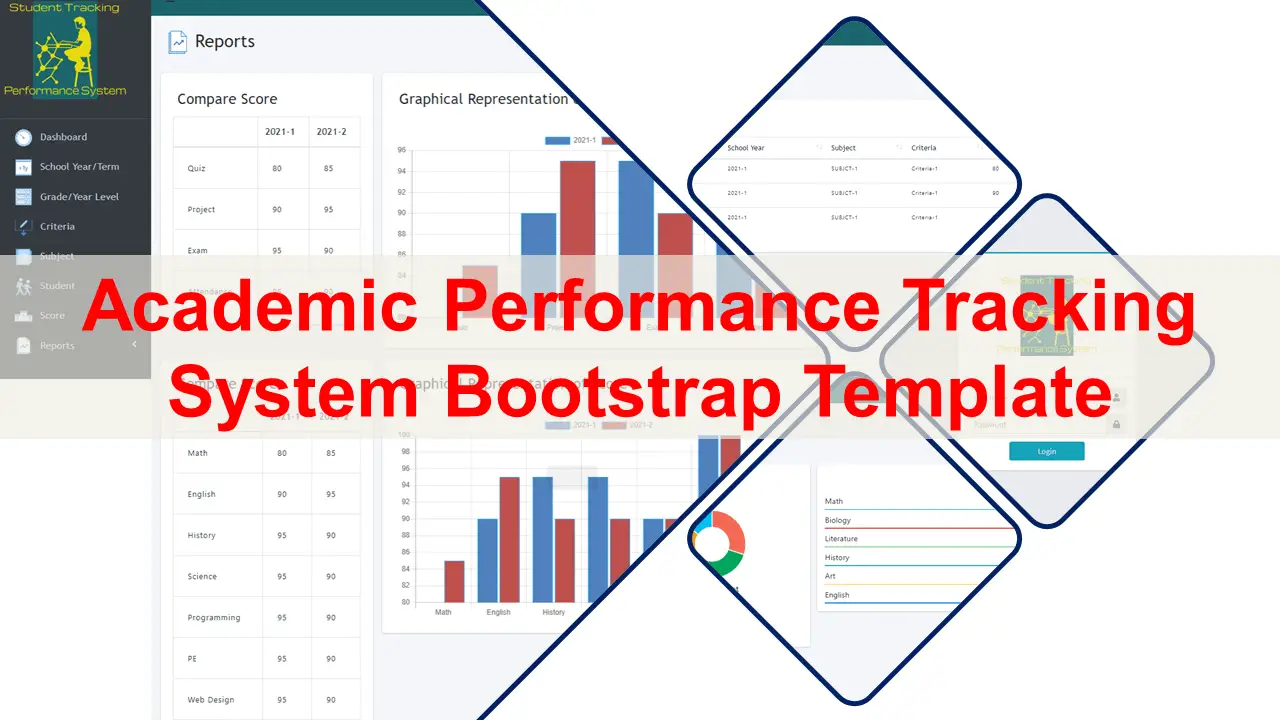
As technology advances, more and more tasks that were once done manually are now being done electronically. One such task is tracking academic performance. Screenshots of the Academic Performance Tracking System are shown below.


Video Demo
FREE DOWNLOAD SOURCE CODE
Summary
The Academic Performance Tracking System (APTS) is an online tool that helps students and teachers keep track of their academic achievement. The system is intended to assist instructors in identifying and supporting students who are having difficulty in school.
The system has had a mixed response. While some educators believe the approach is beneficial in identifying difficult students, others believe it is intrusive and violates students’ privacy. Overall, the system appears to be operating as intended, assisting educators in identifying and supporting problematic students.
One disadvantage of the APTS is that students may find it difficult to understand their progress. Although the approach is intended to show students how they compare to their classmates, some students find it difficult to comprehend.
Overall, the APTS appears to be functioning properly. It aids in the identification of problematic students and the provision of assistance. However, students may find it difficult to understand their progress, and there are possible negatives to consider.
You may visit our Facebook page for more information, inquiries, and comments. Please subscribe also to our YouTube Channel to receive free capstone projects resources and computer programming tutorials.
Hire our team to do the project.
Related Capstone Resources
- Qr Code Fare Payment System Bootstrap Template
- Pharmacy Management System Free Bootstrap Template Source Code
- Driving School Management System Bootstrap Template
- Food Donation Services System Free Bootstrap Template
- Cloud Based Farm Management Assistant System Free Bootstrap Template
- Attendance Monitoring System Thesis
BSIT capstone essentials
General guidance for BSIT capstone projects that applies across all specializations.
- Start Chapter 3 (methodology) first. Forces you to think about the whole system.
- Do documentation and coding in parallel. Never save documentation for the end.
- Meet weekly with the team. Track blockers, adjust the timeline.
- Back up everything daily. Two locations minimum.
- Get adviser feedback per major milestone. Not just at the end.
- Rehearse the defense presentation multiple times. Time yourself.
Common capstone mistakes to avoid
- Copying without attribution. Panels use Turnitin. Cite everything you did not write yourself.
- Over-scoping the project. A well-executed simple system beats a poorly-executed ambitious one.
- Deferring documentation. Documentation quality is a big part of the grade.
- Skipping user testing. Panels ask about user feedback. Have real data.
- Ignoring adviser feedback. Advisers know what the panel will ask.
Recommended free tools for capstone projects
- draw.io / diagrams.net. UML diagrams for Chapter 3.
- Google Docs. Collaboration + version history + adviser comments.
- Zotero or Mendeley. Reference management + auto-formatted citations.
- GitHub. Version control for the source code (also earns E-E-A-T signal on your CV).
- Grammarly. Language + tone check on the documentation.
- Turnitin. Plagiarism check before submission (some schools provide access).
- ChatGPT or Claude. For outline scaffolding — not for writing the actual content.
Where to get more capstone resources
- Capstone project ideas. Browse itsourcecode.com/topics/fyp/ for 140+ tested capstone concepts.
- Working source code. itsourcecode.com/topics/free-projects/ has 1,000+ downloadable projects.
- UML diagrams. itsourcecode.com/uml/ has 300+ free UML examples for Chapter 3.
- ER diagrams. itsourcecode.com/topics/uml/erd/ for database schemas.
Frequently asked questions
How long should a BSIT capstone project take?
4-6 months is typical. Longer timelines encourage scope creep. Shorter timelines risk incomplete testing. Plan for parallel development + documentation to avoid last-minute rush.
What should I focus on first when starting a capstone?
Start with Chapter 3 (system design and methodology) — the diagrams and database schema force you to think about the whole system. Chapter 1 and 2 become easier once you know exactly what you are building.
Should I code first or document first?
Do both in parallel. Design in Chapter 3 first, then start coding while writing Chapter 1 and 2. Do not save documentation for the end. Panels can tell when documentation was rushed.
What common capstone mistakes should I avoid?
Do not over-scope. Do not copy from other capstones without attribution. Do not skip user testing. Do not defer documentation. Do not forget to back up your code and documents daily.
How do I balance capstone with regular coursework?
Block dedicated capstone time in your weekly schedule (10-15 hours minimum). Do not treat capstone as extra credit — it’s your thesis. Communicate schedule conflicts to your team early.

Joken E. Villanueva
Founder & Lead Developer at PIES IT Solution
Founder of PIES Information Technology Solutions, a software company building production-grade applications for institutions across the Philippines. Over 8 years of hands-on full-stack development experience, currently leading the development of ClinicAI, an AI-powered clinic management platform.
Expertise: PHP, MySQL, JavaScript, AI Integration, SaaS Architecture, VB.NET, Database Design, Capstone Documentation, Java · View all posts by Joken E. Villanueva →