
The short answer
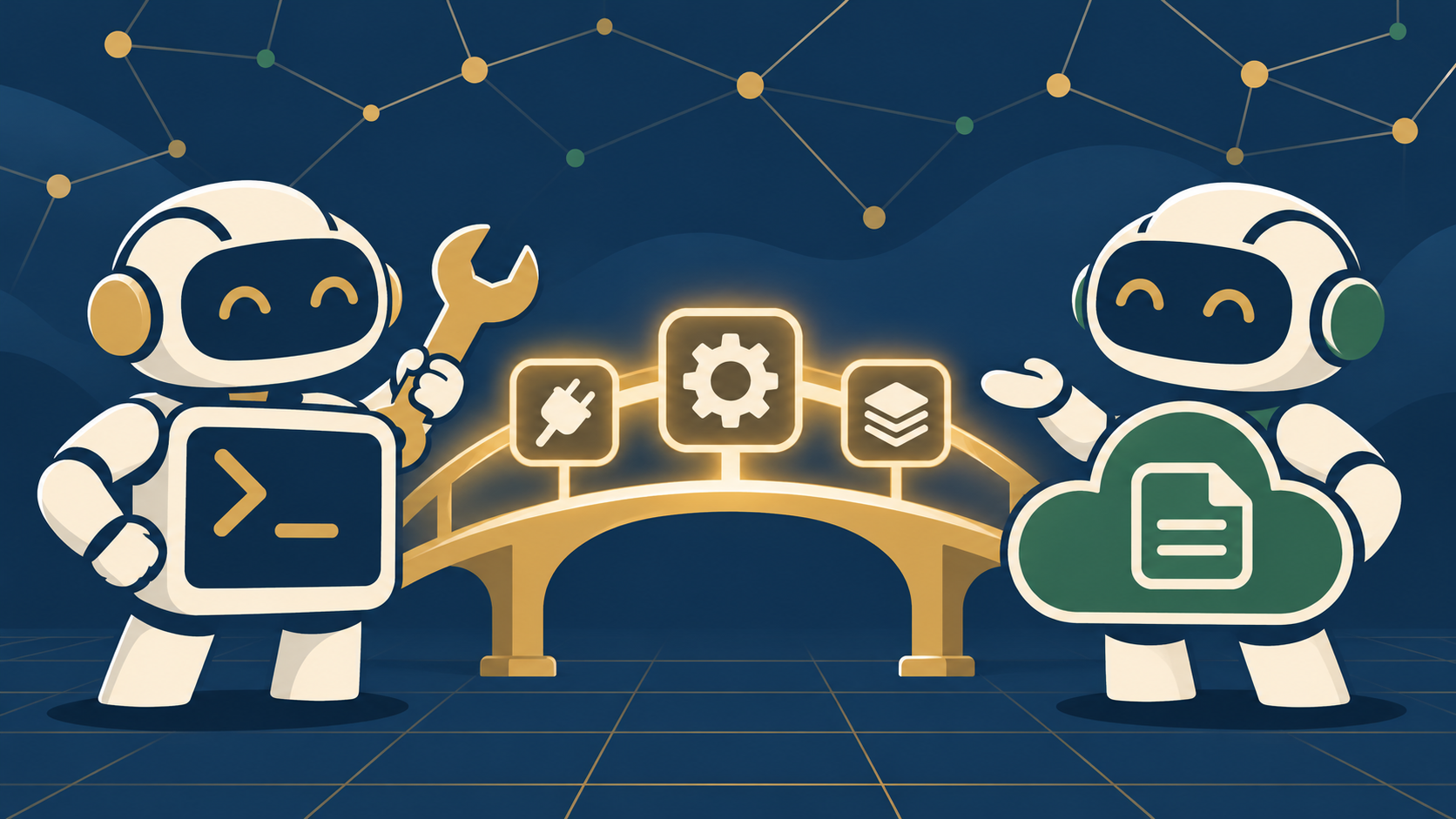
Claude Code SDK is a terminal-first agent framework built around long-horizon tasks with native file-system access, shell execution, and MCP server support. OpenAI Assistants API is a hosted agent runtime with built-in code interpreter, file search, and function calling. Pick Claude Code SDK for coding agents, DevOps automation, and anything that touches the local file system. Pick OpenAI Assistants for customer-facing chat bots, retrieval-heavy workflows, and multi-tenant SaaS where state lives on OpenAI servers.
The agent framework decision in 2026 is not between LangChain and LlamaIndex anymore. It is between Claude Code SDK and OpenAI Assistants API. Both ship as production-grade primitives from the model vendors themselves, which removes a huge chunk of the glue code that older frameworks required. This guide covers what each framework does, where it wins, and which workloads fit each one.
What Claude Code SDK is
Claude Code SDK (Anthropic, GA since Oct 2025) is an agent framework that runs on your machine. The core loop takes a prompt, lets Claude call shell commands, read and edit files, run tests, make HTTP requests, and compose Model Context Protocol (MCP) servers for anything else. The SDK handles the tool-call plumbing, retry logic, context management, and token accounting. You write Python or TypeScript, declare your tools, and Claude orchestrates.
The SDK ships hooks for pre-tool and post-tool events, a permission system for destructive actions, structured output via JSON schema, and streaming support for long-running tasks. It is the same engine that powers the Claude Code CLI product, exposed as a library so you can embed it in your own workflows.
What OpenAI Assistants API is
OpenAI Assistants API (beta since Nov 2023, v2 since Apr 2024) is a hosted agent runtime. You create an Assistant on OpenAI’s servers, attach tools (Code Interpreter, File Search, Function Calling), and spawn Threads for each conversation. OpenAI maintains the message history, manages file uploads via vector stores, and runs code in an isolated sandbox. Your client code just creates threads, posts messages, and polls for responses.
The hosted model is the big differentiator: state lives on OpenAI, not your infrastructure. Thread context is retained between calls automatically. File Search uses OpenAI’s managed vector store. Code Interpreter runs in a Python sandbox you never see. This is great for not reinventing the wheel. It is bad if you need the agent to touch anything on your side.
Side-by-side feature comparison
Execution location: Claude Code SDK runs on your machine (or your server). OpenAI Assistants runs on OpenAI’s servers. If your workload needs to touch the local file system, your repo, your database, or your shell, Claude wins by default.
State management: OpenAI Assistants persists thread state server-side. Claude Code SDK keeps state in memory during a run and expects you to serialize if needed between runs. For long-lived conversational products, OpenAI’s built-in persistence saves a database table. For batch or one-shot tasks, Claude’s in-memory model is simpler.
Tool system: Both support function calling. Claude Code SDK adds native shell execution, file read/edit, HTTP, and full MCP server support (any tool ecosystem that speaks MCP works instantly: Postgres, GitHub, Slack, Linear, Notion). OpenAI Assistants has Code Interpreter and File Search as built-ins and function calling for everything else.
Retrieval: OpenAI Assistants ships File Search (vector store, auto-chunking, auto-reranking) as a managed feature. Claude Code SDK expects you to bring your own retrieval (via an MCP server like filesystem, chromadb, or Postgres pgvector). For retrieval-heavy workloads, OpenAI’s zero-config File Search is a real advantage.
Streaming: Both stream tokens. Claude Code SDK also streams tool-call events so you can show a live “thinking” trace. OpenAI Assistants streams message deltas but tool-call progress is less granular.
Multi-turn planning: Both handle it natively. Claude’s longer context window (200K tokens on Sonnet, 1M on Opus) means fewer manual context compactions. OpenAI’s thread management auto-compacts but you lose fine control over what gets dropped.
Pricing
Both charge per input and output token on the underlying model. The framework itself is free in both cases, which is a big shift from older agent frameworks that required paid platform fees.
Claude Code SDK on Sonnet 5.5 (Nov 2026 pricing): $3 per million input, $15 per million output. Prompt caching cuts repeat input costs by 90 percent, which matters for agents that reference the same system prompt or codebase over many turns.
OpenAI Assistants on GPT-5: $5 per million input, $15 per million output. File Search adds $0.10 per GB per day of vector store storage. Code Interpreter is $0.03 per session (free for the first 3 sessions per thread).
Real-world cost comparison for a coding agent that reads 50K tokens of context per turn and generates 2K tokens of output, across 20 turns: Claude Code SDK with caching is approximately $0.36 per full run. OpenAI Assistants (GPT-5, no comparable caching) is approximately $1.10 per run. For batch workloads at volume, the caching advantage adds up fast.
Observability and debugging
Claude Code SDK exposes every tool call, token count, and context compaction as a structured event stream. You pipe it to Honeycomb, Datadog, or a local SQLite file for debugging. The hooks system lets you intercept and log pre and post tool-call state.
OpenAI Assistants logs are visible in the OpenAI Platform dashboard (threads, runs, messages). The dashboard is adequate for low-volume debugging but not a replacement for proper observability. For production use, you still need to wire up your own logging around the client-side API calls.
Which to pick when
Pick Claude Code SDK if you are building: a coding agent that reads and edits files, a CI/CD automation bot that runs shell commands, an internal DevOps assistant, a refactoring tool, a test-writer, a data-pipeline builder, or anything that composes MCP servers (Postgres plus GitHub plus Slack plus Linear).
Pick OpenAI Assistants API if you are building: a customer-facing chatbot where conversation state must persist across sessions, a document Q&A product leveraging File Search, a data-analysis tool that runs Python in a sandbox, or a multi-tenant SaaS where you do not want to run a stateful backend.
Pick both if you have mixed workloads: use Claude Code SDK for your internal coding agents and dev tooling, use OpenAI Assistants for your customer-facing chat product. Nothing stops you from running both in the same organization.
Migration notes if you are leaving LangChain or LlamaIndex
Both Claude Code SDK and OpenAI Assistants significantly reduce the amount of framework code you need. Typical LangChain agent: 200 to 500 lines of glue. Claude Code SDK equivalent: 20 to 50 lines. OpenAI Assistants equivalent: 30 to 80 lines (slightly more because you poll runs). Most LangChain users migrating in 2026 report deleting 70 to 80 percent of their custom chain code.
The main adjustment is the tool system. LangChain’s tool abstractions do not translate 1:1. Rewrite each tool as a function with a JSON schema. For Claude Code SDK, consider wrapping existing tools as MCP servers so they are reusable across projects.
Frequently Asked Questions
Can I use Claude Code SDK with models other than Claude?
No. Claude Code SDK is Anthropic-specific. If you need to use GPT-5, Gemini, or open-weight models in the same framework, pick a provider-neutral option (older LangChain or LiteLLM). The tradeoff is more glue code.
Does OpenAI Assistants support MCP servers?
Not natively as of Nov 2026. OpenAI uses its own Function Calling format for custom tools. You can bridge MCP to Function Calling with a thin adapter, but it is not first-class.
Which one handles long-horizon planning better?
Claude Code SDK on Sonnet or Opus handles 50 to 200 step tasks reliably, especially with the 1M token context on Opus. OpenAI Assistants with GPT-5 handles similar depth but you lose some control because the thread auto-manages context compaction.
Is the Claude Code SDK the same as the Claude Code CLI?
The CLI is a product built on the SDK. The SDK is the library you embed in your own applications. If you want the Claude Code experience inside your custom tool or product, the SDK is the primitive to use.
What happens to OpenAI Assistants API in the long term?
OpenAI has indicated that Assistants will remain a supported product alongside the newer Responses API. The Responses API is a lower-level primitive that gives more control over tool-calling loops. For new projects in 2026, either is a defensible choice. Assistants is more opinionated and includes File Search and Code Interpreter as built-ins.
Official documentation

Angel Jude Suarez
Full-Stack Developer at PIES IT Solution
Focuses on Python development, machine learning, and AI integration. Has built production AI systems including OpenAI Whisper integration for medical transcription and GPT-4o-powered diagnosis assistance. Strong background in pandas, scikit-learn, and TensorFlow.
Expertise: Python, PHP, Java, VB.NET, ASP.NET, Machine Learning, AI Integration, OpenCV, Django, CodeIgniter · View all posts by Angel Jude Suarez →