
Today, we will explore the JavaScript blooket hack and tricks so that you can enhance your coding skills and develop impressive web applications.
You can enhance your JavaScript skills with the help of this guide.
So if you wanted to master the blooket hacks for JavaScript tricks, keep on reading!
What is “blooket”?
Blooket is a fun and educational website where you can make and play games. It has different game modes like quizzes and flashcards.
Lots of teachers and students like using blooket because it makes learning fun and interactive. Students can join the game on their own devices using a code generated by the teacher or the host.
Blooket wants to make learning super exciting and engaging for everyone.
How does the “blooket” game work?
Here’s a simple explanation of how the blooket game works:
First, the teacher or host selects a set of questions and a fun game mode. Then, a special code is generated for players to use on their own devices to join the game.
Once the game begins, players answer questions to try and win. During the game, students have a great time while also reviewing the material taught in class.
When the game ends, teachers can check detailed score reports and question analyses to see how well their students did.
It helps teachers understand their students’ performance and identify any areas that may need further review.
What is “javascript blooket hack”?
The Javascript blooket refers to a hacks or cheats for the online educational game blooket that is written in the JavaScript programming language.
These hacks can be found on websites such as GitHub and claim to provide various advantages or shortcuts within the game.
How to use “javascript blooket” hacks?
If you want to use a blooket javascript hack, the steps will vary depending on the specific hack you want to use.
Generally, you should know a little bit about JavaScript and how to run scripts in your web browser.
You can find instructions on how to use blooket hacks in many GitHub repositories.
However, I want to remind you that using hacks or cheats from outside sources may not be safe or allowed according to the game’s rules.
Since you really wanted to know on how to use blooket hack in JavaScript then, execute the following instructions:
- Go to the website of github.com, or you can directly navigate github.com/topics/blooket.
You will see the different repositories of blooket hacks or cheats in there.
For example:

- You have to choose which kind of blooket hack you wanted to use in JavaScript. But in our case, we use the following:
a. Click blooket-cheats
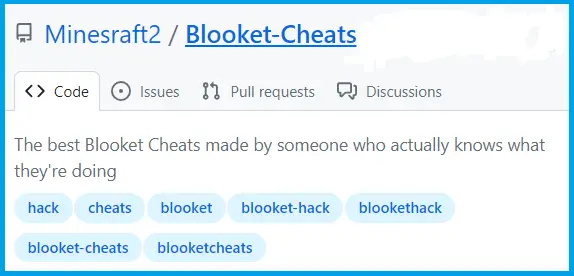
b. Select obfuscated
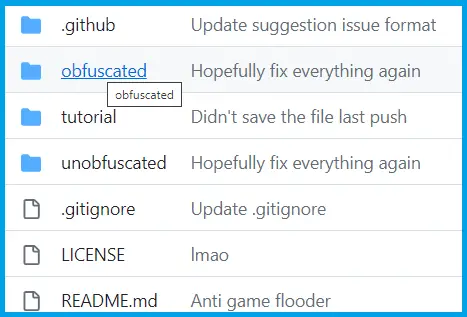
c. Click global
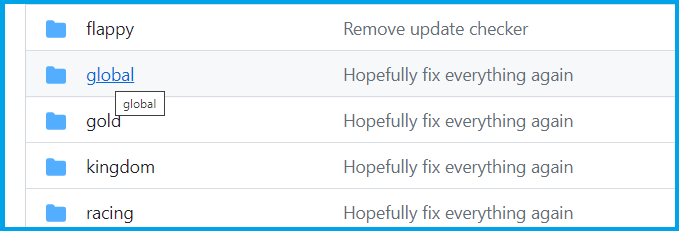
d. Click useAnyBlook.js
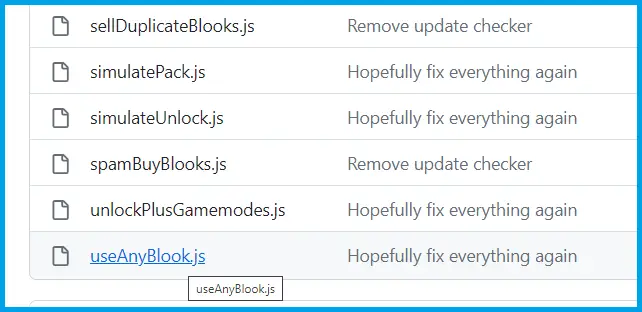
e. Copy the code

- After you copy the code, go back to your blooket dashboard.
- Please open the web browser’s console in the game room or you can use Ctrl + Shift + J.
- Then, paste the code that you copy from Git Hub and press Enter.
- Finally, you’re done. The hack is now active.
Conclusion
In conclusion, the Javascript blooket refers to a hack or cheats for the online educational game blooket that is written in the JavaScript programming language.
If you want to use a blooket javascript hack, the steps will vary depending on the specific hack you want to use.
Generally, you should know a little bit about JavaScript and how to run scripts in your web browser.
This article already gives you a comprehensive guide that will guide you on how you can be able to use the blooket hack.
We are hoping that this guide helps you on how to use blooket hacks. Thank you for reading itsourcecoders 😊
Common use cases for Mastering the JavaScript Blooket Hacks and Tricks
Mastering the JavaScript Blooket Hacks and Tricks appears in most modern JavaScript codebases. The most frequent patterns:
- Front-end applications. React, Vue, Svelte, and vanilla JS all rely on Mastering the JavaScript Blooket Hacks and Tricks for user interactions and rendering logic.
- Back-end services. Node.js APIs use Mastering the JavaScript Blooket Hacks and Tricks in request handlers, middleware, and data pipelines.
- Utility functions. Small reusable helpers wrap Mastering the JavaScript Blooket Hacks and Tricks to encapsulate common transformations.
- Test suites. Unit tests exercise Mastering the JavaScript Blooket Hacks and Tricks across happy-path and edge-case inputs to lock behavior.
- Configuration handling. Read from environment variables or config files and normalize with Mastering the JavaScript Blooket Hacks and Tricks before use.
Working code example
// A realistic example of Mastering the JavaScript Blooket Hacks and Tricks in production code
function processInput(rawValue) {
  // Guard against unexpected input
  if (rawValue == null) {
    return { ok: false, reason: "empty input" };
  }

  const cleaned = String(rawValue).trim();
  if (cleaned.length === 0) {
    return { ok: false, reason: "whitespace only" };
  }

  return { ok: true, value: cleaned };
}

const result = processInput("  hello world  ");
console.log(result); // { ok: true, value: "hello world" }
Best practices when working with Mastering the JavaScript Blooket Hacks and Tricks
- Use strict mode. Add “use strict” at the top of your files, or use ES modules which are strict by default.
- Prefer const over let. Only use let when you actually reassign. Never use var in new code.
- Add TypeScript. Adopting TypeScript catches many bugs in Mastering the JavaScript Blooket Hacks and Tricks at compile time.
- Write focused functions. Small functions with a single responsibility are easier to test and reason about.
- Add unit tests. Cover the happy path plus edge cases like empty strings, null, undefined, and boundary numbers.
Common pitfalls with Mastering the JavaScript Blooket Hacks and Tricks
- Type coercion surprises. == does implicit conversion. Always use === and !== unless you specifically want coercion.
- Hoisting confusion. Function declarations hoist, but const/let do not. Declare before use.
- this binding. Arrow functions inherit this from the surrounding scope. Regular functions do not. Choose deliberately.
- Silent NaN propagation. Math with a NaN value results in NaN. Guard with Number.isFinite() at boundaries.
Official documentation
Featured guides worth reading next
Frequently Asked Questions
Is JavaScript still worth learning in 2026?
What is the difference between var, let, and const?
Which JavaScript version should I target in 2026?
What is the best free editor for JavaScript?
How do I run JavaScript locally vs in the browser?
What can I build with JavaScript for my BSIT capstone?

Caren Bautista
Technical Writer at PIES IT Solution
Responsible for crafting clear, well-structured, and beginner-friendly content across the platform. Handles the writing, proofreading, and editorial review of tutorials, guides, and documentation to ensure every article is accurate, readable, and easy to follow.
Expertise: Technical Writing · Content Creation · Documentation · Editorial Writing · JavaScript · TypeScript · Python · Python Errors · HTTP Errors · MS Excel
· View all posts by Caren Bautista →