
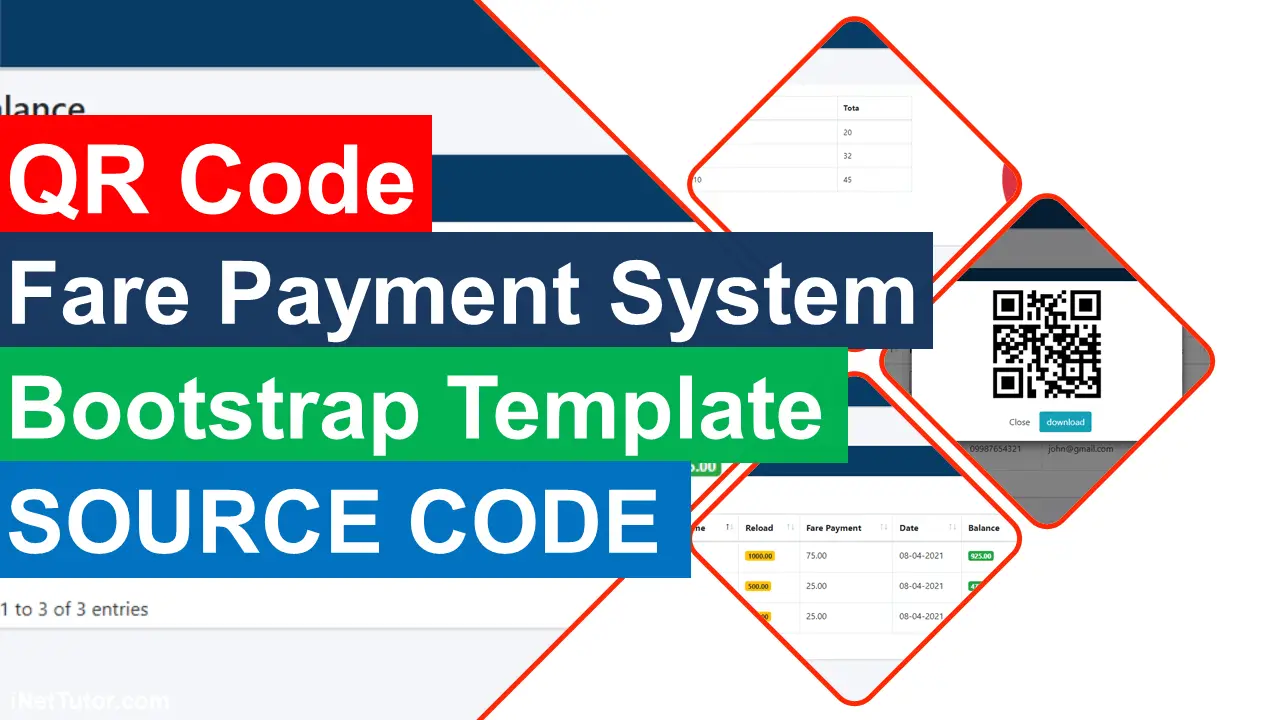
About the Project
A QR code fare payment system is a system that uses QR codes to allow passengers to pay for their fare using their mobile device. The QR code is scanned by the driver, and the fare is paid using the passenger’s mobile device. This system is convenient for passengers because they do not need to carry cash or tokens, and it is also secure because the payment is done through a mobile device. This system is becoming more and more popular, and it is expected to be the standard fare payment system in the future.
Purpose
The QR Code Fare Payment System is a mobile application that allows passengers to pay for their transportation using QR codes. The application will allow passengers to purchase tickets, check the status of their tickets, and receive notifications about their fare payment.
Design Features
The QR Code Fare Payment System will be designed as a mobile application that allows passengers to purchase tickets, check the status of their tickets, and receive notifications about their fare payment.
User Interface
The user interface of the QR Code Fare Payment System will be designed to be easy to use and understand. The application will have a simple and easy-to-use layout that is user-friendly and accessible. The user interface will also include a search function that allows passengers to find a loading station and pay for their transportation.
Ticketing
The QR Code Fare Payment System will allow passengers to purchase tickets using QR codes. The tickets will be stored in the application and can be used at any time. The QR code payment system will also allow passengers to check the status of their tickets and receive notifications about their fare payment.
Benefits of using the project
The following are the advantages and benefits of using the QR Code Fare Payment System.
- The fare payment system using QR code offers a more convenient and faster way for commuters to pay their fares.
- It eliminates the need to queue up and purchase tickets from the ticketing machines.
- With the QR code fare payment system, commuters can simply scan the QR code on the fare gate to enter and exit the station.
- The fare payment system also allows for real-time tracking of riders’ movements through the QR code.
- This provides commuters with an overview of their journey and any possible delays.
- It also encourages commuters to use public transport by providing them with a convenient and affordable way to pay their fares.
- QR Code fare payment system also facilitates fare evasion and abuse by reducing the chances of commuters losing their hard-earned money.
- In addition, QR code fare payment system is more secure as it uses biometric verification for identity authentication.
- Overall, QR code fare payment system offers numerous advantages over traditional manual fare payment methods.
Screenshots


Video Demo
Summary
QR code fare payment systems have several advantages over other fare payment systems. First, they are convenient for passengers because they do not need to carry cash or tokens. Second, they are secure because the payment is done through a mobile device. Third, QR code fare payment systems are becoming more and more popular, and this trend is expected to continue in the future. Finally, QR code fare payment systems have several advantages over traditional fare payment systems such as ticket machines.
You may visit our Facebook page for more information, inquiries, and comments. Please subscribe also to our YouTube Channel to receive free capstone projects resources and computer programming tutorials.
Hire our team to do the project.
Related Topics and Articles:
QR Code Digital Vaccine Certification Capstone Project
QR Code Attendance System with SMS Notification
Preventive Maintenance of Equipment with QR Code
OJT Timesheet Monitoring System using QR Code
QR Code Generator in VB.NET Tutorial and Source code
Online Tracking and Monitoring System of Cargo using QR Code
Related Capstone Resources
- Driving School Management System Bootstrap Template
- Pharmacy Management System Free Bootstrap Template Source Code
- Academic Performance Tracking System Bootstrap Template
- Food Donation Services System Free Bootstrap Template
- Cloud Based Farm Management Assistant System Free Bootstrap Template
- Student Management System Project
BSIT capstone essentials
General guidance for BSIT capstone projects that applies across all specializations.
- Start Chapter 3 (methodology) first. Forces you to think about the whole system.
- Do documentation and coding in parallel. Never save documentation for the end.
- Meet weekly with the team. Track blockers, adjust the timeline.
- Back up everything daily. Two locations minimum.
- Get adviser feedback per major milestone. Not just at the end.
- Rehearse the defense presentation multiple times. Time yourself.
Common capstone mistakes to avoid
- Copying without attribution. Panels use Turnitin. Cite everything you did not write yourself.
- Over-scoping the project. A well-executed simple system beats a poorly-executed ambitious one.
- Deferring documentation. Documentation quality is a big part of the grade.
- Skipping user testing. Panels ask about user feedback. Have real data.
- Ignoring adviser feedback. Advisers know what the panel will ask.
Recommended free tools for capstone projects
- draw.io / diagrams.net. UML diagrams for Chapter 3.
- Google Docs. Collaboration + version history + adviser comments.
- Zotero or Mendeley. Reference management + auto-formatted citations.
- GitHub. Version control for the source code (also earns E-E-A-T signal on your CV).
- Grammarly. Language + tone check on the documentation.
- Turnitin. Plagiarism check before submission (some schools provide access).
- ChatGPT or Claude. For outline scaffolding — not for writing the actual content.
Where to get more capstone resources
- Capstone project ideas. Browse itsourcecode.com/topics/fyp/ for 140+ tested capstone concepts.
- Working source code. itsourcecode.com/topics/free-projects/ has 1,000+ downloadable projects.
- UML diagrams. itsourcecode.com/uml/ has 300+ free UML examples for Chapter 3.
- ER diagrams. itsourcecode.com/topics/uml/erd/ for database schemas.
Frequently asked questions
How long should a BSIT capstone project take?
4-6 months is typical. Longer timelines encourage scope creep. Shorter timelines risk incomplete testing. Plan for parallel development + documentation to avoid last-minute rush.
What should I focus on first when starting a capstone?
Start with Chapter 3 (system design and methodology) — the diagrams and database schema force you to think about the whole system. Chapter 1 and 2 become easier once you know exactly what you are building.
Should I code first or document first?
Do both in parallel. Design in Chapter 3 first, then start coding while writing Chapter 1 and 2. Do not save documentation for the end. Panels can tell when documentation was rushed.
What common capstone mistakes should I avoid?
Do not over-scope. Do not copy from other capstones without attribution. Do not skip user testing. Do not defer documentation. Do not forget to back up your code and documents daily.
How do I balance capstone with regular coursework?
Block dedicated capstone time in your weekly schedule (10-15 hours minimum). Do not treat capstone as extra credit — it’s your thesis. Communicate schedule conflicts to your team early.

Joken E. Villanueva
Founder & Lead Developer at PIES IT Solution
Founder of PIES Information Technology Solutions, a software company building production-grade applications for institutions across the Philippines. Over 8 years of hands-on full-stack development experience, currently leading the development of ClinicAI, an AI-powered clinic management platform.
Expertise: PHP, MySQL, JavaScript, AI Integration, SaaS Architecture, VB.NET, Database Design, Capstone Documentation, Java · View all posts by Joken E. Villanueva →