112 – Managing SSS Contribution Logic for Payroll System
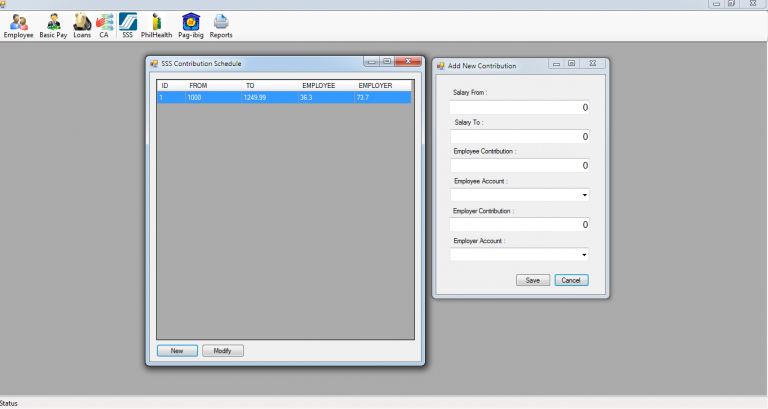
This tutorial about “Managing SSS Contribution Logic for Payroll System”. The usual algorithm for this kind of module would be the IF ELSE statement or the CASE and the like. …

Payroll Management Systems (PMS) remain one of the highest-demand capstone topics for Philippine BSIT and BSCS students. This hub collects free source code, step-by-step tutorials, and complete UML documentation for building payroll systems that compute salaries, deduct SSS/PhilHealth/Pag-IBIG/BIR contributions, calculate 13th month pay, and generate payslips, fully BIR-compliant for Philippine workplaces.
What you’ll find in the Payroll System hub
Complete source code in PHP + MySQL, Python (Django), Java (NetBeans), VB.NET + SQL Server
Philippine tax compliance modules: TRAIN Law BIR withholding, SSS contribution tables, PhilHealth, Pag-IBIG
13th month pay calculator with automatic prorating for partial-year employees
Payslip generation: PDF export or printable HTML formats
Step-by-step tutorials covering database design, tax computation, and report generation
UML diagrams: Use Case, Activity, Sequence, Class, ER for capstone documentation
Philippine-specific calculations your system needs
Standard modules panels expect in 2026:
SSS contribution table: bracket-based, store in DB for easy updates
PhilHealth contribution: percentage-based with monthly cap
Pag-IBIG contribution: employee/employer split
BIR withholding tax: TRAIN Law brackets (2018 onwards)
Service Incentive Leave (SIL): 5 days/year minimum
13th month pay: total basic salary ÷ 12, paid by December 24
Overtime computation: 25% premium for overtime, 30% for rest days
Required reports for compliance
A panel-ready PMS should generate:
Individual payslips (PDF or printable)
Payroll summary report per pay period
BIR Form 2316 (annual employee certificate)
SSS, PhilHealth, Pag-IBIG remittance reports
13th month pay report (December)
Cost-center reports (optional but impressive)
Related capstone collections
Employee Management System, share the employee table with this PMS
UML Diagrams Library, Activity, Sequence, ER diagrams for payroll documentation
Payroll System Documentation PDF, sample Chapter 1-5 for reference
PHP Projects Hub, broader PHP starter templates
Scroll down to browse the full Payroll System catalog ↓
This tutorial about “Managing SSS Contribution Logic for Payroll System”. The usual algorithm for this kind of module would be the IF ELSE statement or the CASE and the like. …
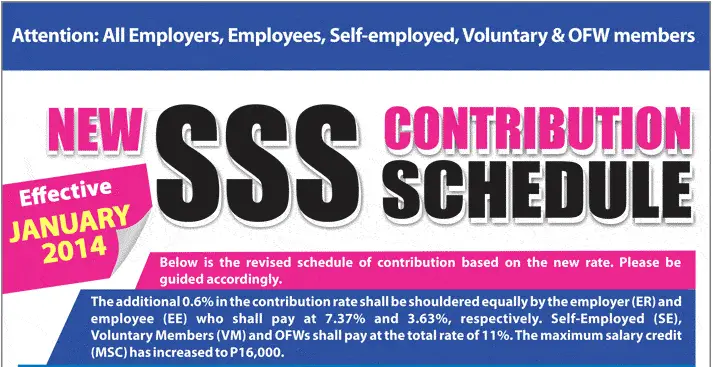
Before we begin with our management to SSS Contribution in our payroll system, it is important to guide us on what are the step by step guide on using the …
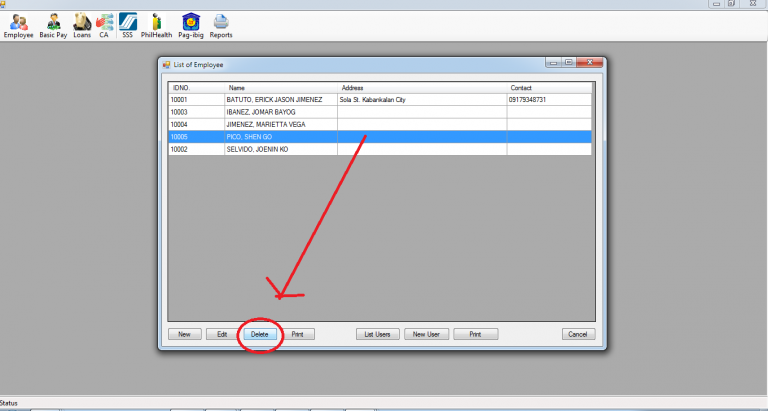
This tutorial about Delete Statement Using Visual Basic Application for managing payroll system module. As database practice, it is important that all records are intact and can be recovered for …
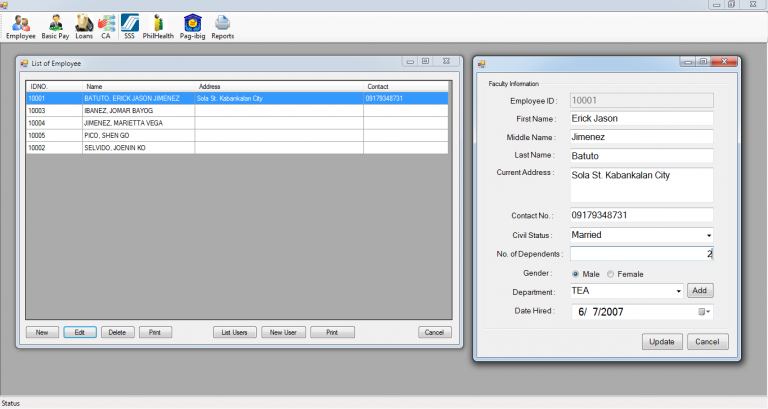
The principles covering information standards covers the accuracy of personal data. The Data Protection Act imposes obligations to ensure the accuracy of the personal data you process. It must also …
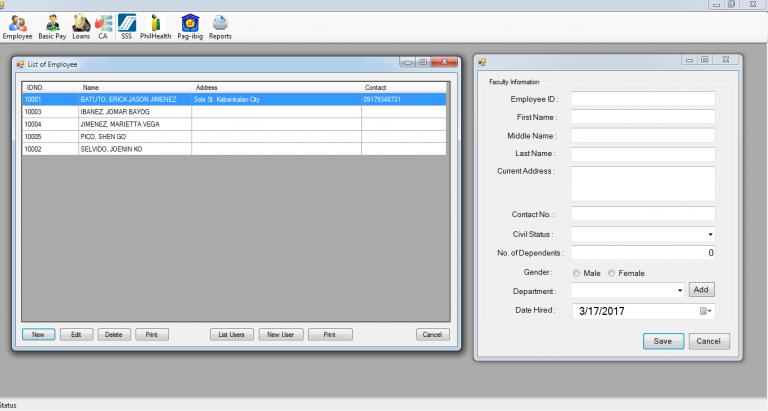
Insert Statement using Visual Basic Application for Managing Payroll System Module In our previous lesson we define the module for Managing Payroll System for SQL statement Insert, Update and Delete. …
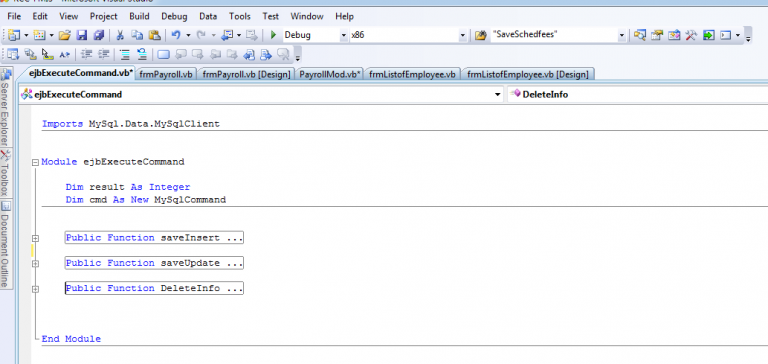
MySQL Insert, Update, Delete Statement for Managing Payroll System Module In our previous tutorials entitled “106 – MySQL Query Select Statement for Managing Payroll System Module“, if you are following, …
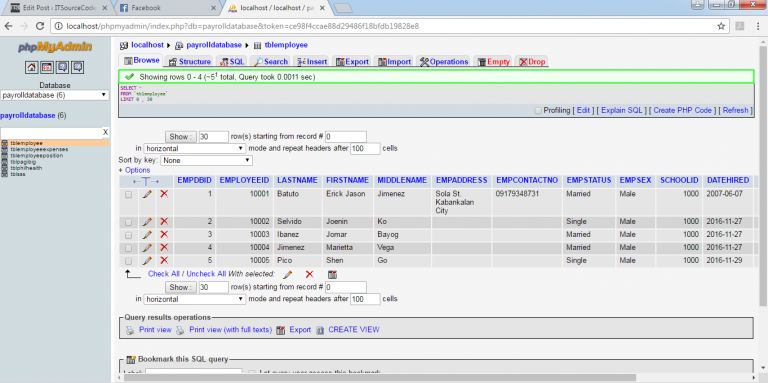
The MySQL Query Select Statement returns a result set of records from one or more tables. A select statement retrieves zero or more rows from one or more database tables …
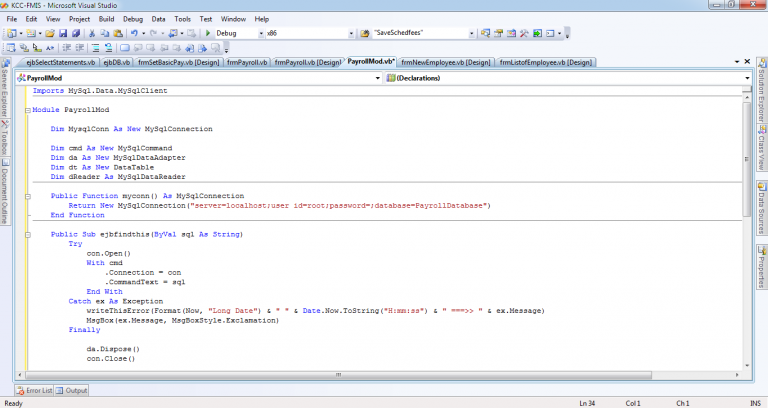
This lesson will focus on Setting Database Connection for Managing the Payroll System Module statement defines a reference type available throughout its namespace. In this case, we set a standard …
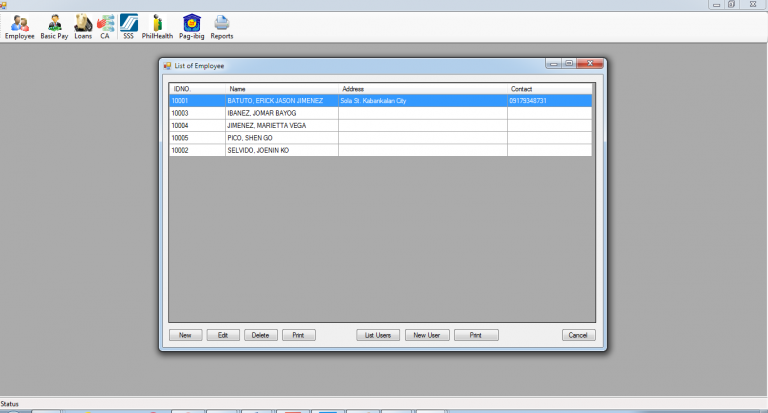
Managing employee information is a big task even if you have a system for it. In this tutorial, we will be dealing the basic employee information that would only be …
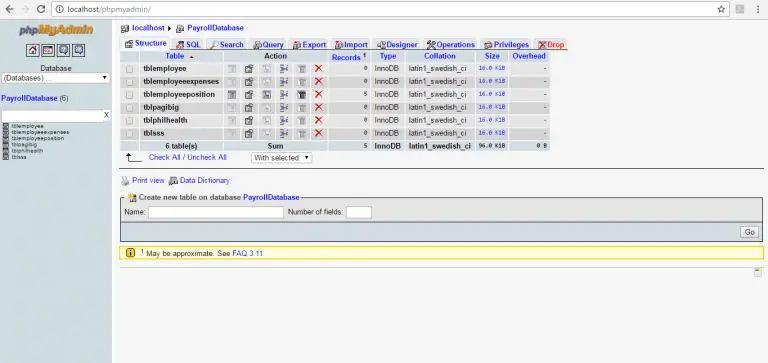
Payroll System Database Design Using MySQL After we have developed the application design or the user interfaces for our Payroll System, we will now proceed to our Payroll System Database …
In designing the graphical user interface using VB.Net, it is important to take note the following guidelines. We as programmer often have the tendency to design our program with colorful …
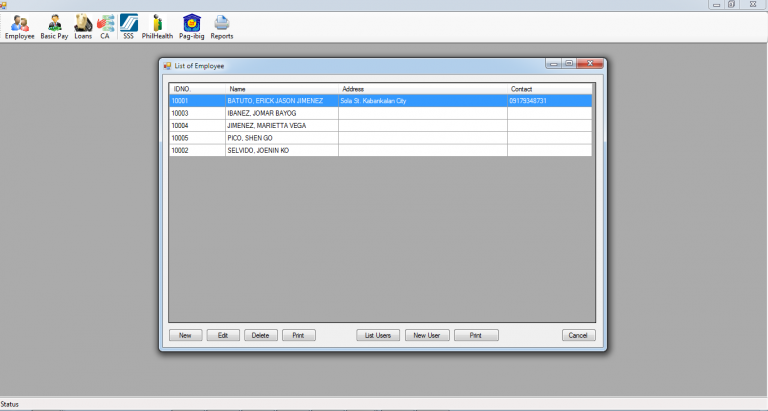
Welcome to Programming Payroll System! A Step by step guide designed to help you learn how to program the most common features of a Payroll System Using Visual Basic 2008 …
pay_period table that locks attendance records once payroll is computed — prevents retroactive changes and provides an audit trail that impresses panels.