
Let’s talk about how to check and change line spacing in MS Word in this chapter. In a Microsoft Word document, line spacing is the space between two lines.
By taking a few simple steps, you can make this distance bigger or smaller, depending on what you need. This chapter will show you how to set the space between lines and between paragraphs.
Table of contents
What is line spacing in MS Word?
The line spacing is the distance between each line in a paragraph. Word gives you the ability to alter the line spacing so that it can be single spaced. Meaning only one line is displayed, double spaced, meaning two lines are displayed, or any other quantity you like.
In addition, the default line spacing in Microsoft Word is 1.08 lines, which is a little more than single spaced.
Further, line spacing determines the amount of vertical space between lines of text in a paragraph. By default, lines are single-spaced. It means that the space between them is big enough for the biggest font on that line plus a little bit more.
Where is line spacing in word?
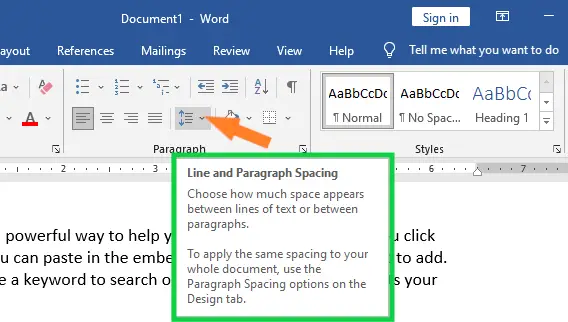
You will find the line spacing when you click the Home tab and look in the Paragraph section for the line spacing button. When you click the button for line spacing, a menu will drop down from which you can choose a line spacing. But first, to change the space between lines, you have to pick the lines you want to change.
Different types of line spacing in MS Word
Most of the time, in Word, you can choose between four types of line spacing.
- single spacing;
- 1.5 times spacing;
- double spacing or
- a custom amount,
Where the numbers represent the size of the space in relation to the size of a line.
Single spacing and double spacing are the most common types of line spacing, and you can choose between them when setting line spacing in Word or another digital tool.
In some instances, you may desire to utilize a custom line spacing to make your text seem its best. Different fonts look better with varying amounts of spacing.
Typically, double spacing is used to generate more readable writings, however in other circumstances, single spacing may be preferable to fit more ideas on a single page. Depending on your needs, you may occasionally want to employ a custom level of spacing to optimize the appearance of your printed papers.
What is paragraph spacing in word?
The amount of white space between two paragraphs is called paragraph spacing. Controlling the space between words is an important part of formatting a document, just like using the right font or the right margins.
Paragraph spacing determines the amount of space above or below a paragraph. When you press Enter to start a new paragraph, the spacing is carried over to the next paragraph, but you can change the settings for each paragraph.
How to Check Line Spacing in Word
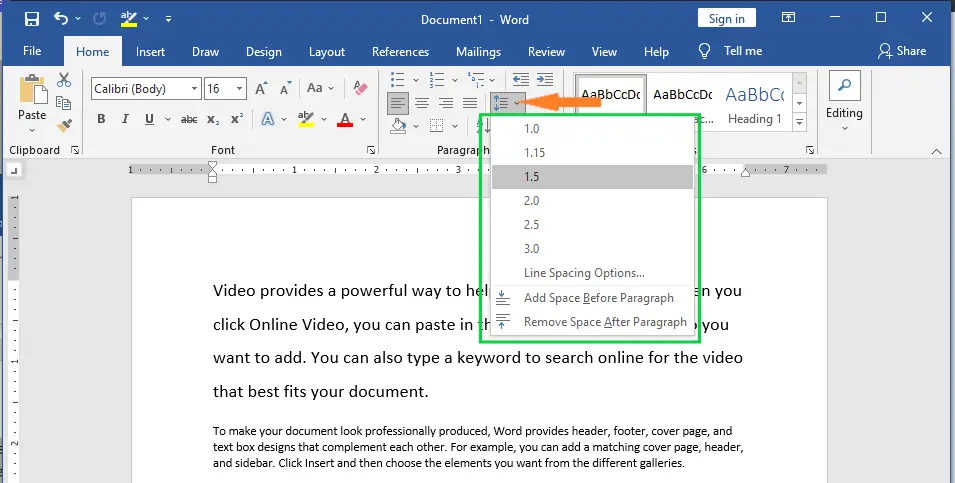
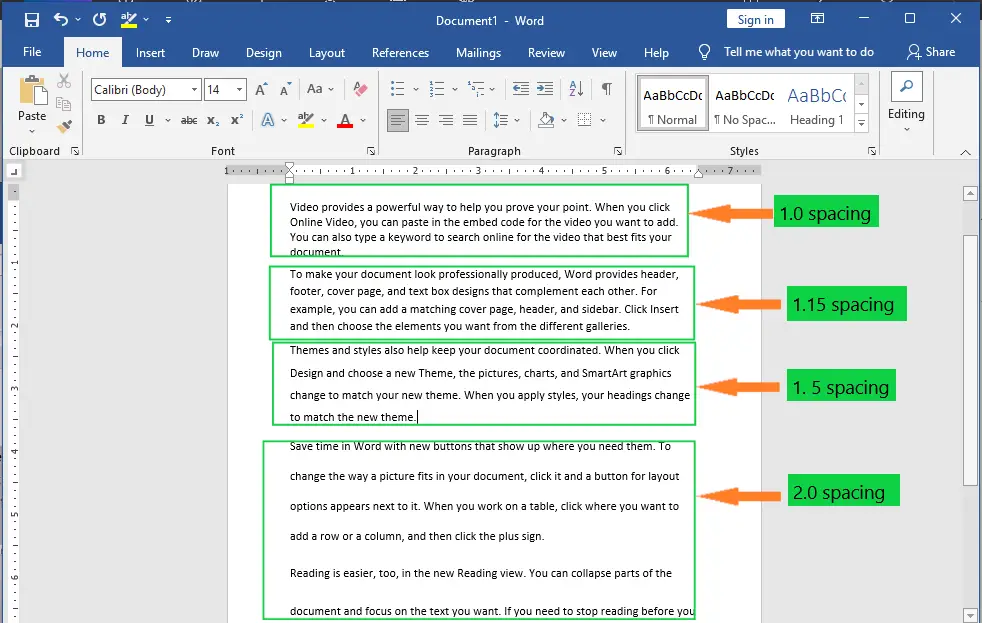
Here are the steps on how to check paragraph and line spacing in Word. There are multiple line spaces available: 1.0, 1.15, 1.5, 2.0, 2.5, 3.0, etc.
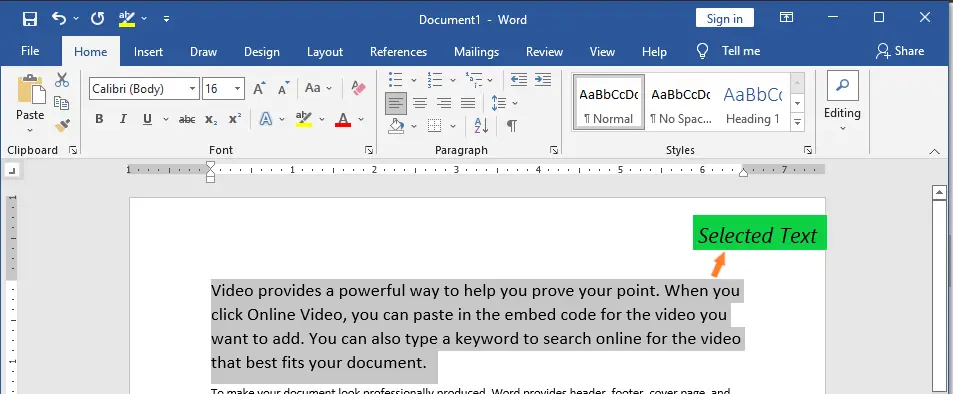
- Step 1: Select the text, line, or paragraph whose spacing you wish to modify.

- Step 2: Select the Line and Paragraph Spacing tab from the Paragraph menu under the Home tab and choose your desired line spacing.

- Results:
Note: Perform the same steps for different line spacing
How to change Paragraph spacing using Dialog box
MS Word’s Paragraph dialog box provides an alternative method for change line and paragraph spacing. In addition to Line Spacing, the Paragraph dialog box provides a vast array of options for modifying our Word document beautifully and precisely.
In the Paragraph dialog box, there are many Line Space options, such as Single, 1.5 lines, Double, At Least, Exactly, Multiple, etc.
- Select the paragraph or paragraphs you want to format.

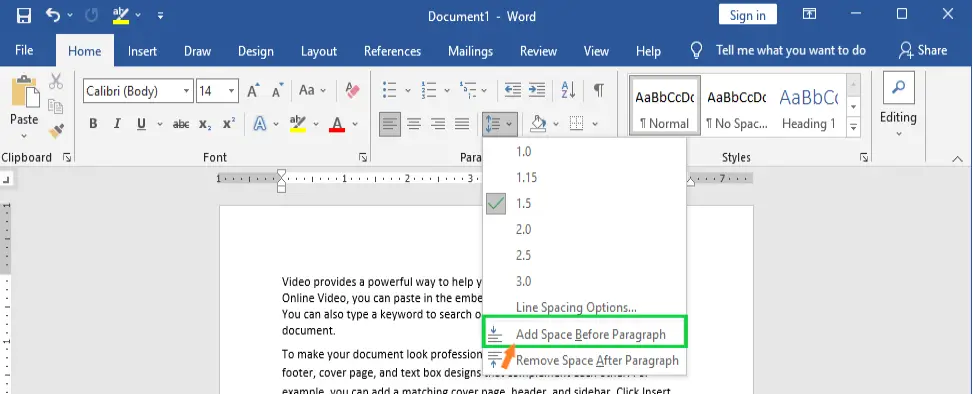
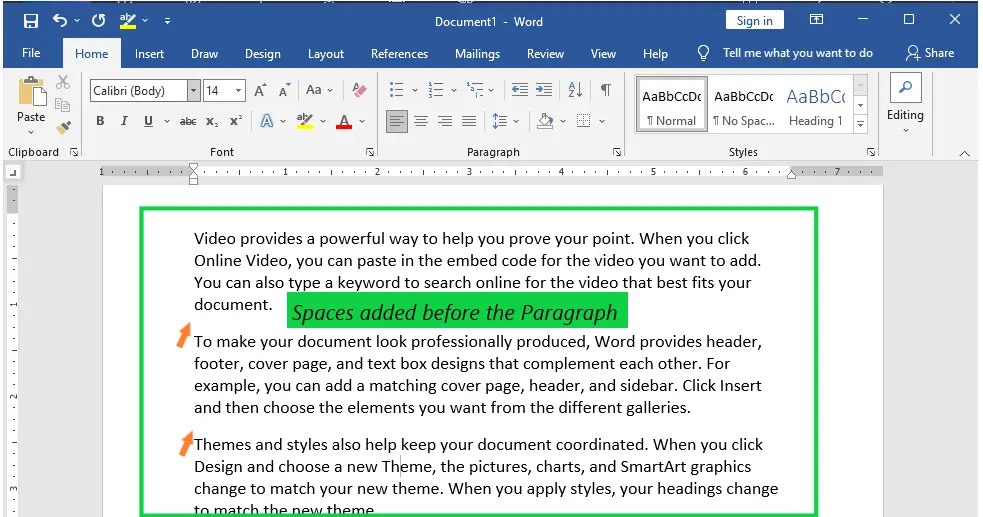
- Click the Line and Paragraph Spacing command on the Home tab. From the drop-down menu, select Add Space Before Paragraph or Remove Space After Paragraph. In our case, we’ll choose Add Space Before Paragraph.

- The document’s paragraph spacing will change.

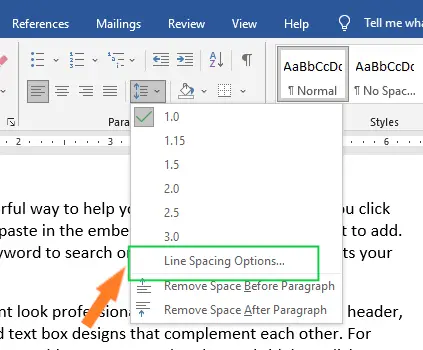
- Select Line Spacing Options from the drop-down menu to open the Paragraph dialog box.

- Here you can adjust the amount of space before and after the paragraph.

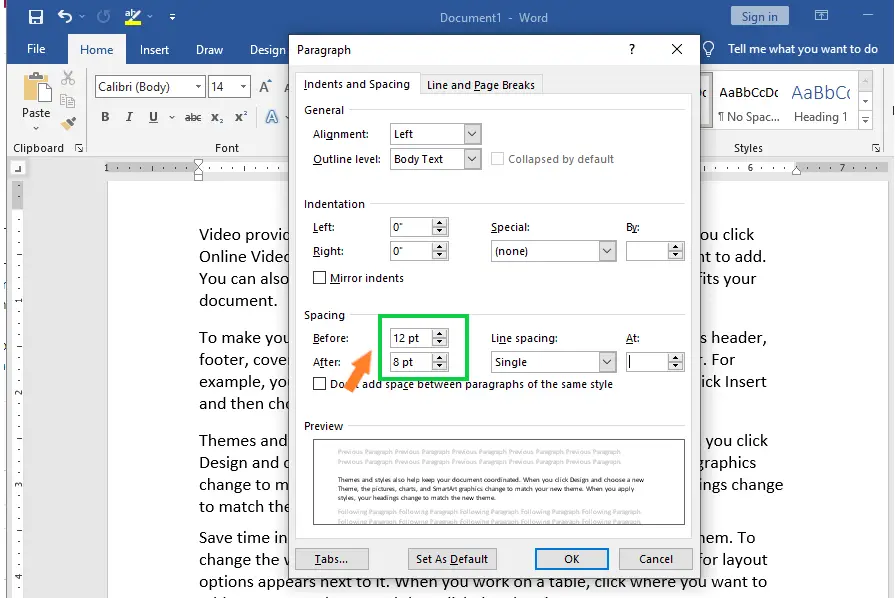
You can use Word’s Set as Default tool to store all of your formatting modifications and apply them automatically to new documents.
Summary
In summary, we’ve talked about how to check and change line spacing in Word, as well as the different types of line and paragraph spacing in a document and what those terms mean. In addition, we know the ways on how to check spacing in paragraph of Microsoft Word that makes our document presentable and creative.
Meanwhile, if you want learn more about the previous tutorial on how to apply bullets and numbering and as well as to use borders and shading in Microsoft Word which still part of formatting your documents. You can browse those guide if you having a hard time in exploring your documents.
We hope this tutorial helps you as you format your documents in MS Word.
PREVIOUS
Featured guides worth reading next

Glay Eliver
Programmer & Technical Writer at PIES IT Solution
Glay Eliver is a programmer and writer at PIES IT Solution, author of over 600 tutorials at itsourcecode.com. Specializes in JavaScript tutorials, Microsoft Office how-tos (Excel, Word, PowerPoint), and Python error debugging covering ImportError, TypeError, AttributeError, ModuleNotFoundError, and JavaScript ReferenceError. Authored several of the site’s highest-traffic Excel and MS Office reference articles.
Expertise: JavaScript · MS Excel · MS Word · MS PowerPoint · Python · Python ImportError · Python TypeError · Python AttributeError · ModuleNotFoundError · JavaScript ReferenceError · Pygame · View all posts by Glay Eliver →
What is new for line spacing in 2026
The Aug 2026 Word Copilot update added an Adjust for readability action. Highlight any paragraph, open the Copilot pane, and type Adjust for readability. Copilot analyzes font size, paragraph length, and reading context, then suggests optimal line spacing (typically 1.15 to 1.5 for body text, 1.0 for headers). One click applies the suggestion.
Word also added Auto line spacing hints in the Home tab. When you type paragraphs longer than 3 sentences with tight line spacing (1.0 or less), a small callout appears suggesting an increase for readability. Ignorable, but helpful for long documents where readability matters more than pagination.
Common line spacing pitfalls
- Line spacing changes only current paragraph. If you want to change spacing document-wide, select all (Ctrl A) FIRST, then apply the change. Otherwise it only affects the paragraph where the cursor is.
- Custom multi-line spacing not showing correctly. The Home tab dropdown shows only standard values (1.0, 1.15, 1.5, 2.0, 2.5, 3.0). For custom spacing (like 1.35 or Exact 18pt), open the Paragraph dialog for the actual number.
- Line spacing looks wrong on print. Word uses either Multiple or Exactly line spacing modes. Multiple scales with font size (recommended for most documents). Exactly locks the spacing regardless of font size (needed for typography-strict work like technical documentation).
- Spacing before or after paragraphs adds to line spacing. The Paragraph dialog has separate Spacing Before + Spacing After fields (measured in points), independent of line spacing. Both add to visible white space between paragraphs.
Standard line spacing values for common documents
Different document types have conventional line spacing standards:
- Business letter: 1.15 line spacing (default in modern Word templates)
- Resume: 1.0 to 1.15 to fit content on one page
- Academic paper (APA, MLA): 2.0 (double-spaced) throughout
- BSIT capstone thesis: 2.0 for body text, 1.0 for tables and long code blocks
- Meeting notes: 1.0 for compact reference use
- Presentation handouts: 1.5 for reader comfort during meetings
Official documentation
Quick step-by-step summary (click to expand)
- Click into the paragraph Click anywhere inside the paragraph whose line spacing you want to check.
- Open Home tab Click the Home tab on the ribbon.
- Look at Line Spacing button In the Paragraph group, find the Line Spacing button (icon: horizontal lines with up-down arrows). The current spacing value is displayed in the dropdown.
- Open Paragraph dialog for details For exact multi-line values, click the small arrow in the bottom-right of the Paragraph group. The Paragraph dialog opens with Line spacing field showing the exact value (Single, 1.15, 1.5, Double, Multiple, etc.).
- Use Reveal Formatting for full details Press Shift + F1 to open the Reveal Formatting pane. Click any text and the pane shows all formatting including exact line spacing value.
Frequently Asked Questions
How do I quickly check line spacing on a Word paragraph?
Click into the paragraph, look at the Line Spacing button in the Home tab Paragraph group. The value displays in the dropdown.
Where do I find exact line spacing values?
Click the small arrow in the bottom-right of the Home tab Paragraph group to open the Paragraph dialog. The Line spacing field shows the exact value.
Why is my line spacing not changing when I try?
You changed spacing for only the current paragraph. Select all (Ctrl A) before changing to apply document-wide.
What line spacing is standard for a business letter?
1.15 is the modern default in Word. Older templates use 1.0. Both are acceptable for business correspondence.
Can Copilot suggest line spacing for me?
Yes as of the Aug 2026 update. Open the Copilot pane and type Adjust for readability. Copilot analyzes context and suggests optimal spacing.
What is the difference between Multiple and Exactly line spacing?
Multiple scales with font size (recommended most cases). Exactly locks spacing regardless of font size (needed for typography-strict work).