
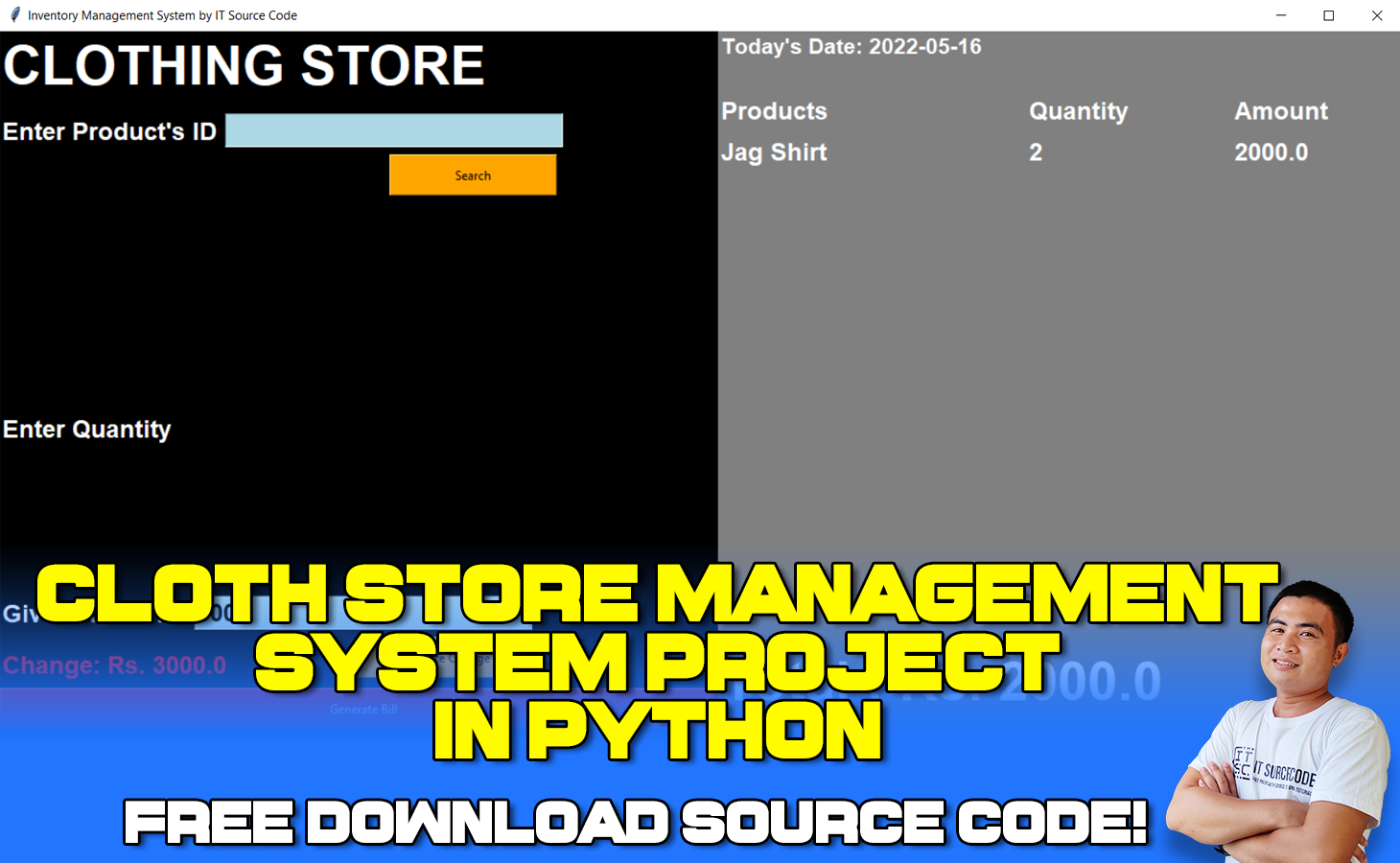
What is Cloth Store Management System Project in Python?
The Cloth Store Management System Project in Python was created specifically for adding clothes item details.
The system clarifies the fundamental principle of storing and creating item information.
A clothes Store, often known as a clothing store, is an establishment that offers ready-made garments.
A boutique is a small store that sells high-end or designer apparel. An outfitter is a store that sells clothing for a specific market, such as school uniforms or outdoor activities.
Clothing store inventory software automates old school retail processes such as physical inventory counts and reorder point calculations.
Often integrated or included with retail POS systems, these systems keep accurate, up-to-date analytics that help smoothly manage an apparel business.
Common features of clothing store inventory software include inventory reports, backordering, inventory optimization, multichannel sales, order management, and sales reports.
What is the difference between boutique and store?
is that a boutique is a tiny shop, particularly one that sells trendy clothing, jewelry, and the like, but a store is a location where products can be accumulated or kept on a regular basis.
Is a clothing store considered retail?
Large department stores and chains, as well as small shops, can be found in every community.
Consumer products suppliers on the internet are also retailers. Clothing, furniture, and toys are examples of consumer products. Some stores offer personalized services.
What type of business is clothing line?
The word “clothing line” refers to creating and producing your own apparel while maintaining control and direction throughout the process. If you want to be successful in the industry, there is basically only one thing you will need. Passion.
What is another name for a clothing store?
Need synonyms for clothing store? Here’s a list of similar words from our thesaurus that you can use instead.
| Clothes Shop |
| Clothes Store |
| Clothing Outlet |
| Fashion Outlet |
| Fashion Boutique |
What is a Clothing Company?
A clothing line is a collection of clothing that is tailored for a specific demographic and sold in stores and/or online.
Fashion Management System
Fashion management deals with the building of brand image and awareness in the general public as well as the management of marketing, merchandising and retail of fashion products.
This includes organization, planning and promotion of a fashion business as well.
Cloth Store Management System Project in Python : Project Details and Technology
| Project Title: | Cloth Store Management System Project in Python with Source Code |
|---|---|
| Abstract : | Cloth Store Management System Project is specially designed for the purpose of adding clothing item’s detail. |
| Project Type: | Desktop Application |
| Technology : | PyCharm IDE Platform |
| Language: | Python |
| Database : | MySQL |
| Developer: | IT Source Code |
Project Output
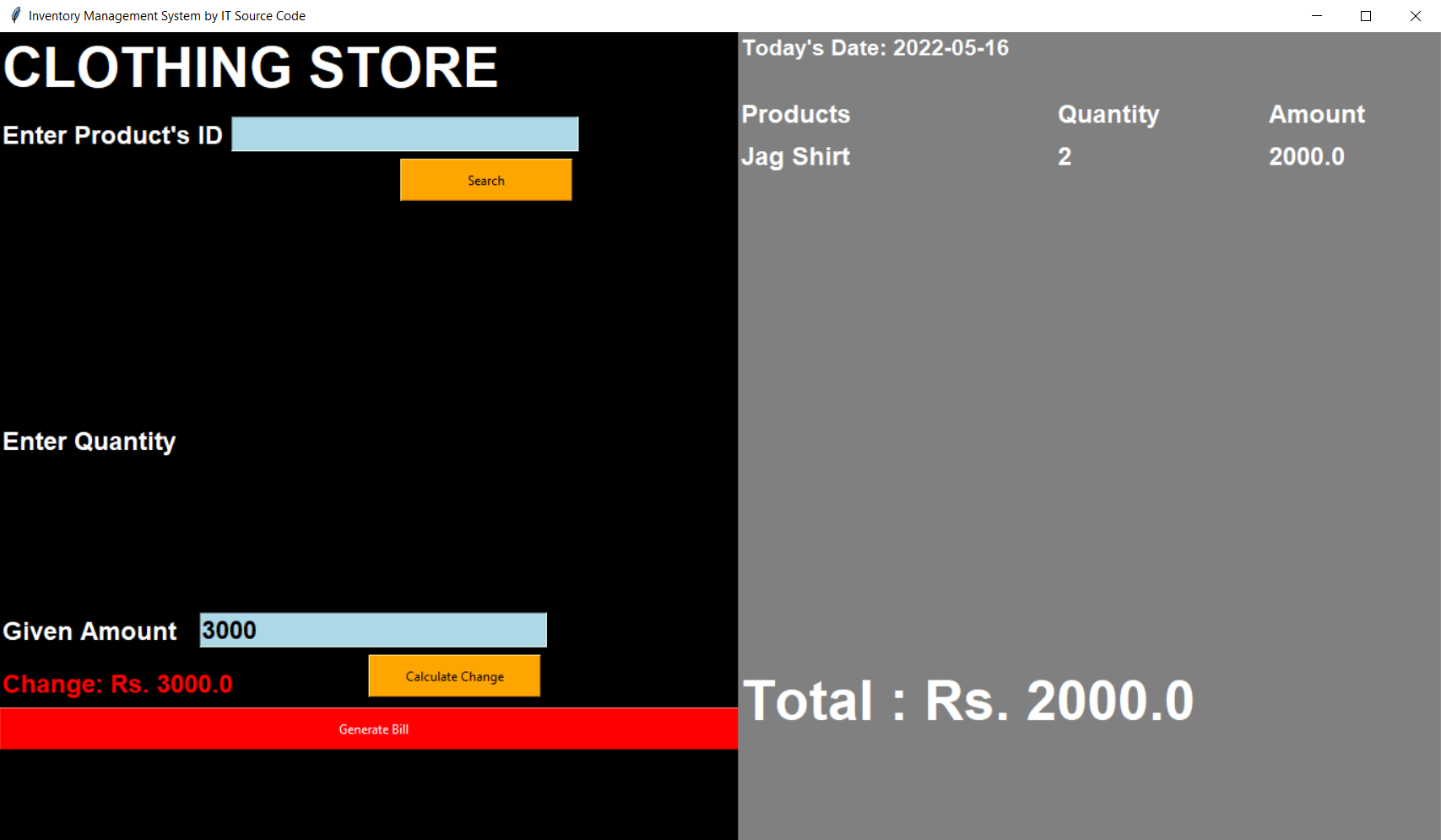
To start executing this Cloth Store Management System Project in Python with Source Code, make sure you have PyCharm IDE installed in your computer.
By the way if you are new to python programming and you don’t know what would be the the Python IDE to use, I have here a list of Best Python IDE for Windows, Linux, Mac OS that will suit for you. I also have here How to Download and Install Latest Version of Python on Windows.
Steps on how to run Cloth Store Management System Project in Python with Source Code
Time needed: 5 minutes
Cloth Store Management System Project in Python with Source Code
- Step 1: Download source code.
First, download the source code given below.

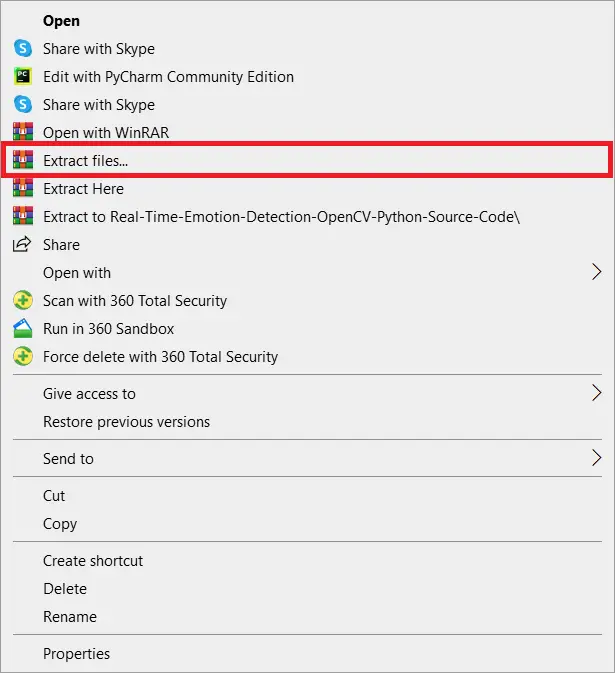
- Step 2: Extract file.
Next, after you finished download the source code, extract the zip file.

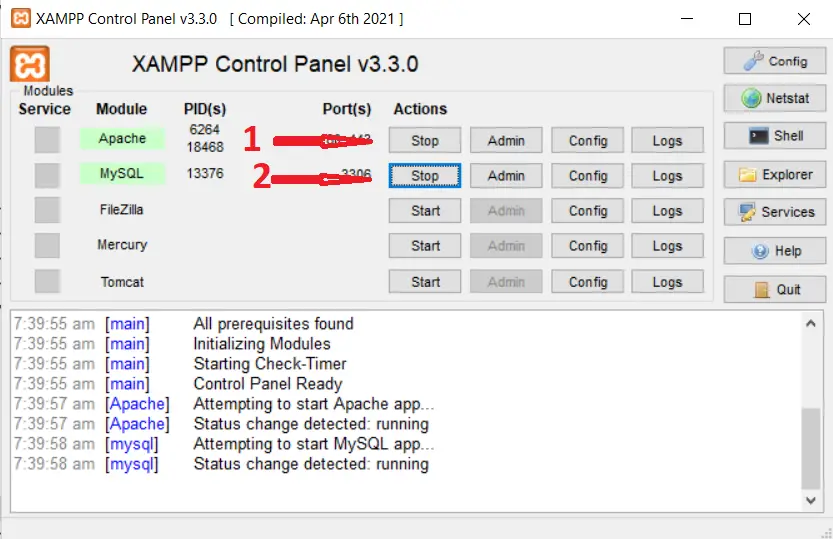
- Step 3: Open Xampp
Next, open xampp and start “apache” and “mysql“.

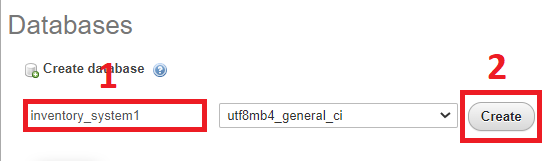
- Step 4: Create new Database
Next, open any browser and type “localhost/phpmyadmin”.

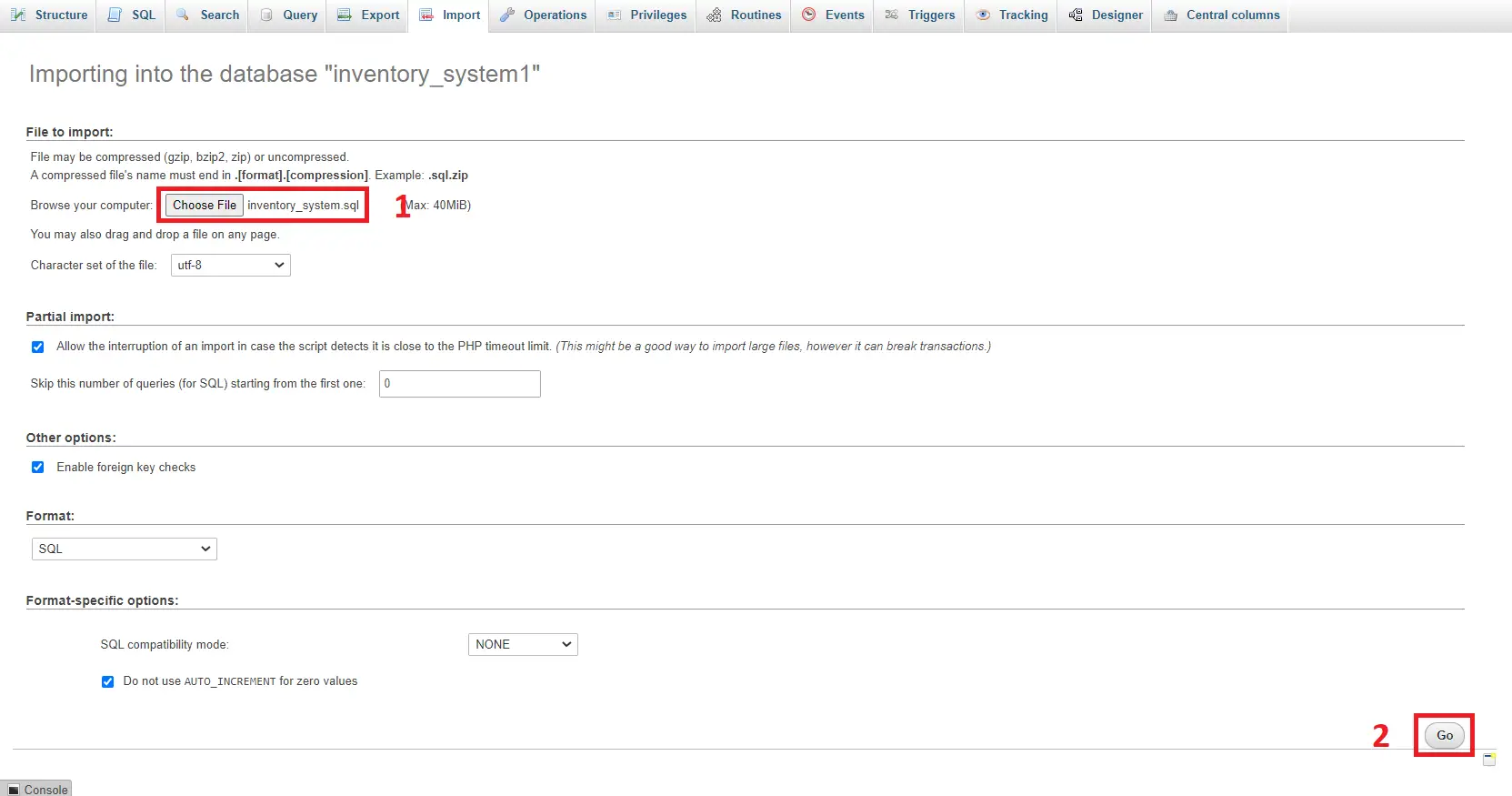
- Step 5: Import SQL File
Next, Import the given sql file to your database you’ve create.

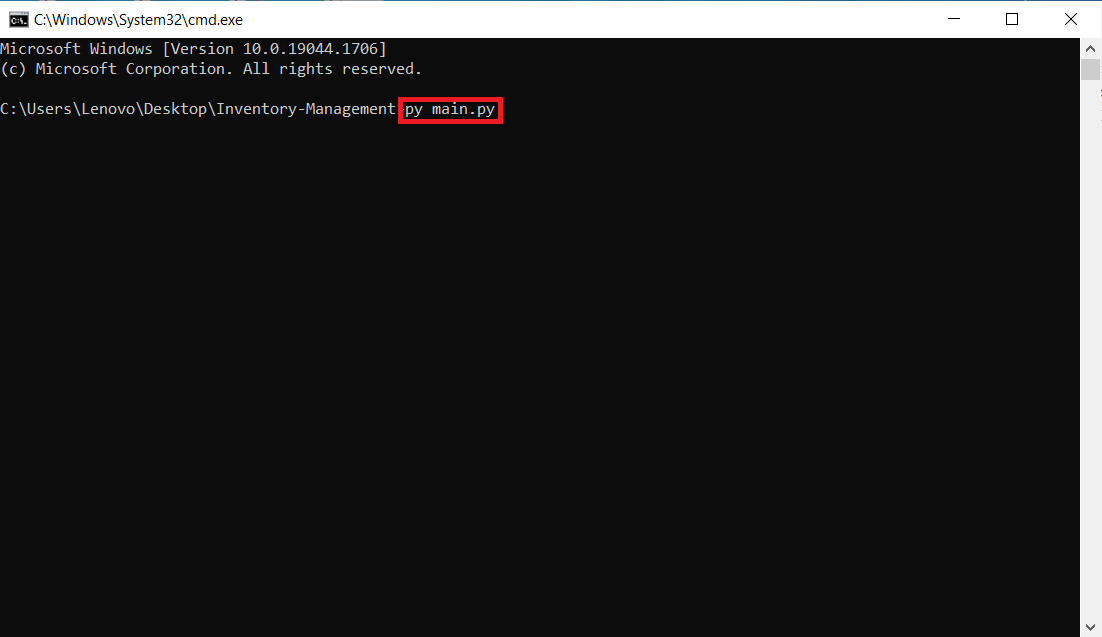
- Step 6: Run Project
Last, open the project folder and run the project.

Download Source Code below
Summary
This Cloth Store Management System is a quick and easy Python project for beginners and intermediates alike, and it broadens knowledge of Python applications.
Finally, this entire Python project with free source code is an absolute project and a valuable means for users to learn and explore more about it.
Related Articles
Inquiries
If you have any questions or suggestions about the Cloth Store Management System Project in Python with Source Code, please feel free to leave a comment below.
Technology stack and requirements
To run this Python project on your development machine, you need:
- Python 3.10 or higher. Download from python.org or install via Anaconda if you prefer bundled packages.
- pip package manager. Comes with Python. Used to install project dependencies from requirements.txt.
- Virtual environment. Use venv or conda to isolate project dependencies from your global Python install.
- VS Code or PyCharm. Free code editors with Python syntax highlighting, IntelliSense, and debugging.
- Git. For version control and cloning source code repositories.
Installing the source code
- Download or clone the repository. Get the ZIP archive from the download link on this page and extract it.
- Create a virtual environment. Open a terminal in the project folder and run: python -m venv venv, then activate it (venv\Scripts\activate on Windows or source venv/bin/activate on Mac/Linux).
- Install dependencies. Run pip install -r requirements.txt to install all libraries the project needs.
- Configure environment variables. If the project uses API keys (OpenAI, Anthropic, database), create a .env file and set the required keys.
- Run the project. Follow the run command in the README (usually python main.py or streamlit run app.py).
Using this project for your BSIT capstone
- Chapter 1 (Introduction). Discuss the real-world problem this system solves. Cite Philippine or international use cases where the manual process could be automated.
- Chapter 2 (RRL). Compare your project against 5-10 similar published works. Cite ACM, IEEE, or arXiv papers for academic-standard sources.
- Chapter 3 (Methodology). Document the model architecture, training data, hyperparameters, and evaluation metrics used.
- Chapter 4 (Results). Report accuracy, precision, recall, F1-score, and confusion matrix. Screenshot the running app on real inputs.
- Chapter 5 (Conclusion). Identify features for Version 2: better model, larger dataset, mobile deployment, or REST API.
Modules typical of Cloth Store Management System Project
- Core Python logic. Main functions implementing the business logic of the system.
- Data storage. SQLite for simple projects, PostgreSQL or MongoDB for larger data.
- User interface. Tkinter for desktop, Streamlit for data dashboards, or Flask/FastAPI for web.
- Input validation. Type checking and range validation before processing user data.
- Reports. CSV or PDF export using pandas.to_csv() or ReportLab.
- Testing. pytest unit tests covering core functions.
Common enhancements for capstone review
- Add REST API. Convert desktop app to FastAPI service for mobile or web front-ends.
- Multi-user support. Add login, roles, and per-user data isolation.
- Cloud deployment. Deploy to Render, Railway, or Fly.io for public access.
- Docker containerization. Package the app in Docker for portable deployment.
Official documentation
Frequently Asked Questions
How does this Python management system work?
Standard Tkinter architecture: Frame with Treeview for listings, Entry/Combobox/DateEntry for input, sqlite3/MySQL via parametrized queries, reportlab for PDF reports.
What Python version and libraries does this project require?
Most projects in this batch use Python 3.10, 3.11, or 3.12. Standard libs: tkinter (built-in), sqlite3 (built-in). External: pip install pillow opencv-python pygame mysql-connector-python reportlab requests beautifulsoup4.
How do I set up the database for this Python project?
For SQLite (most common, no setup): the .db file auto-creates on first run. For MySQL: install MySQL Server, create an empty database, import the included .sql file, edit connection in db.py with your credentials.
Can I use this Python project for a BSIT capstone or thesis?
Yes. Python is rising fast in Philippine BSIT panels. Extend it: add user roles, dashboards (matplotlib), PDF reports (reportlab), email notifications (smtplib), real domain extension. Pair with Chapter 1-5 documentation.
Why am I getting ‘ModuleNotFoundError’?
Three common Python issues: (1) Module not installed, pip install
Where can I find more Python projects with source code?
Browse the Python Projects hub for the full library. For computer vision see OpenCV Projects. For ML capstones see Machine Learning Projects. For BSIT capstone ideas see 150 Best Capstone Project Ideas.

Angel Jude Suarez
Full-Stack Developer at PIES IT Solution
Focuses on Python development, machine learning, and AI integration. Has built production AI systems including OpenAI Whisper integration for medical transcription and GPT-4o-powered diagnosis assistance. Strong background in pandas, scikit-learn, and TensorFlow.
Expertise: Python · PHP · Java · VB.NET · ASP.NET · Machine Learning · AI Integration · OpenCV · Django · CodeIgniter
· View all posts by Angel Jude Suarez →