
A Todo List Django provides features such as login and register the models for all the users, proper authentication system, feature to update user’s profile and many more.
Users can add their To-do just by clicking the add button and it will be automatically be shown in the homepage.
This Django Todo App also includes a downloadable Todo List Django source code for free, just find the downloadable source code below and click to start downloading.
To start creating a Todo List App Django, makes sure that you have PyCharm Professional IDE Installed in your computer.
| About Project | Project Details | Definition |
|---|---|---|
| Project Name | Todo List App Django | The Todo List App Django is developed using Python Django, HTML and CSS. This To Do List Django provides simple and interactive interface for end-users for adding their To-dos and manage them i.e. delete or update their To-dos. |
| Python version (Recommended) | 3.8 Version | Python 3.8 introduces some new syntax to the language, as well as a few small modifications to existing behavior and, most importantly, a slew of performance improvements, following in the footsteps of the previous 3.7 version. |
| Programming Language Used | Python Django Language | Django is a high-level Python web framework for building safe and maintainable websites quickly. Django is a web framework built by experienced developers that takes care of a lot of the heavy lifting so you can focus on developing your app instead of reinventing the wheel. |
| Developer Name | itsourcecode.com | Free projects containing source code in Java, PHP, Python, Django, VB.Net, Visual Basic, C, C++, C#, Javascript, and other languages are available on this website. |
| IDE Tool (Recommended) | Sublime, Visual Studio, PyCharm | Sublime Text is a source code editor that is available for purchase. It comes with built-in support for a variety of programming and markup languages. Plugins, which are often community-built and maintained under free-software licenses, allow users to extend the functionality of the system. Sublime Text has a Python API to help with plugins. |
| Project Type | Web Application | A web application, unlike computer-based software programs that operate locally on the device’s operating system, is application software that runs on a web server. The user uses a web browser with an active network connection to access web apps. |
| Database | SQLite | SQLite is a programming language that is used to create embedded software for devices such as televisions, cell phones, and cameras. It can handle HTTP requests with low to medium traffic. SQLite has the ability to compress files into smaller bundles with less metadata. SQLite is a temporary dataset that is used within an application to process data. |
Project Overview
You must first establish a virtual environment and a Django app project in order to develop this application. The next step is to create a data model that illustrates the connections between lists view and to-do items.
The database and tables needed to support this model will be automatically generated using Django’s built-in object-relational mapping tool.
You’ll frequently use Django’s convenient runserver command while you create your Django to-do list app to make sure everything is functioning as it should.
Due to Django’s pre-made admin interface, this can help even before your web pages are complete.
You’ll create your own web pages to display your app after that. These are presented in Django as templates. HTML skeleton pages that can be filled with actual application data are known as templates.
It is not the intention of templates to make logical decisions about which template to display or what data to deliver. You’ll need views to carry out that logic. The logic of the application belongs in Django’s views.
For list generation and updating, as well as for the things that lists will include, you will code views and templates. You’ll discover how to connect your pages and pass the information they require using Django’s URL dispatcher.
The next step is to continue adding views and templates that let users remove items and lists. Finally, you’ll add, update, and remove to-do lists and items to test your new user interface.
By finishing this project, you’ll get knowledge about how to create this program and how its various parts work together. After that, you’ll be equipped to handle your subsequent Django project independently.
Prerequisites
You should be confident in the following abilities to finish this tutorial:
- Python scripts are executed via the command line
- Python coding using IDLE or another code editor of your choice
- Using Python packages and modules
- Recognizing object inheritance in Python object-oriented programming
It’s alright if you don’t have all of the necessary background information before beginning this course. In actuality, getting started might help you learn more. If you run into trouble, you may always pause and check the resources listed here.
How to create a Todo List App Django
Time needed: 5 minutes
Here are the steps on how to run the Todo List App Django
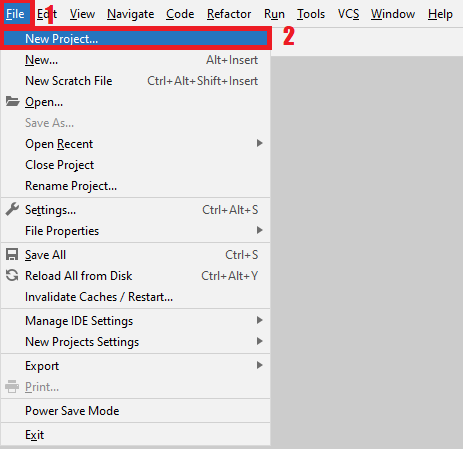
- Step 1: Open file.
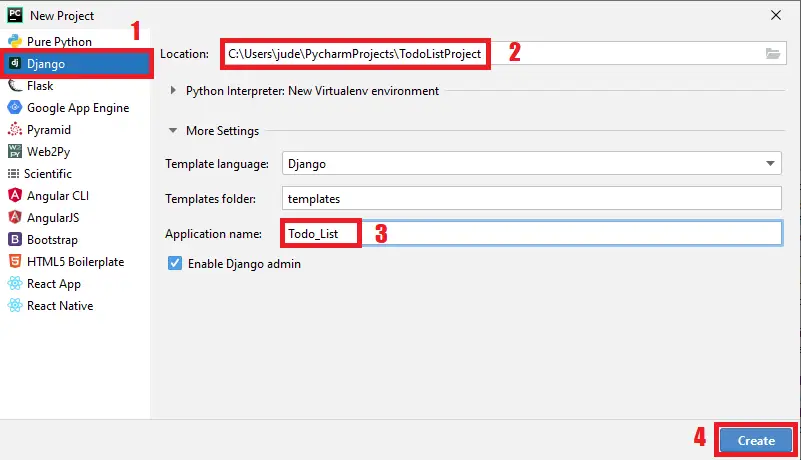
First , open “pycharm professional” after that click “file” and click “new project“.

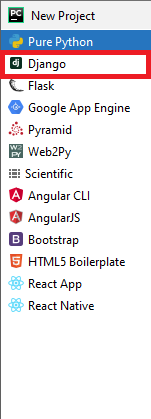
- Step 2: Choose Django.
Second, after click “new project“, choose “Django” and click.

- Step 3: Select file location.
Third, select a file location wherever you want.

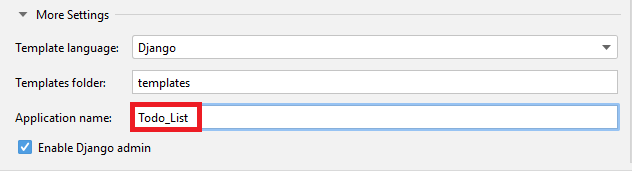
- Step 4: Create application name.
Fourth, name your application.

- Step 5: Click create.
Fifth, finish creating project by clicking “create” button.


How To Run The Project Todo List App Django?
1. ) pip install -r requirements.txt
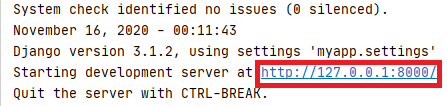
2. ) python manage.py runserver
Downloadable Source Code Below.
I have here the list of Best Python Project with Source code free to download for free, I hope this can help you a lot.
Summary
The system is built fully in Django Framework in back-end and HTML, CSS in front-end. It has full-featured user interface with all the functionalities
This Article is the way to enhance and develop our skills and logic ideas which is important in practicing the python programming language which is most well known and most usable programming language in many company.
You have gained knowledge about web applications, Django admin, and its architecture along the road. To increase code reuse and boost maintainability, you’ve used inheritance and current object-oriented ideas.
Official documentation
Frequently Asked Questions
How does this Django project work?
Built with Django framework (Python MVT), Django ORM, Django Templates, MySQL/PostgreSQL/SQLite. Standard structure: urls → views → models → templates. Django auth handles users. Ready to extend for BSIT capstone scope.
What Django and Python versions does this project require?
Most projects in this batch run on Django 4.x or 5.x with Python 3.8+. A few older projects need Django 3.2 with Python 3.7. Check the requirements.txt file for exact versions. To run any: install Python, create a virtualenv (python -m venv venv), activate it, pip install -r requirements.txt, run python manage.py migrate, then python manage.py runserver.
How do I set up the database for this Django project?
Most projects use SQLite (zero setup, auto-creates db.sqlite3 in project root on first migrate). For projects using MySQL or PostgreSQL: install the database server, create an empty database, edit settings.py DATABASES[‘default’] with your credentials, run python manage.py migrate. For sample data: python manage.py loaddata fixtures.json (if a fixture file is included) or create a superuser via python manage.py createsuperuser.
Can I use this Django project for a BSIT capstone or thesis?
Yes, but extend it. A bare CRUD app is too narrow for full capstone scope. Add: user roles via Django Groups, dashboards (Chart.js + AJAX endpoints), PDF exports (ReportLab or WeasyPrint), email notifications (Django send_mail), real domain extension (analytics, audit log, multi-branch). Pair with Chapter 1-5 documentation matching your panel’s rubric.
Why am I getting ModuleNotFoundError, OperationalError, or ‘No such table’ errors?
Three common Django startup issues: (1) ModuleNotFoundError: virtualenv not activated OR pip install -r requirements.txt skipped. (2) OperationalError: database credentials in settings.py don’t match your local MySQL/PostgreSQL. (3) ‘No such table’: you skipped python manage.py migrate. Also: if settings.py imports fail, check Python version compatibility (Django 5 needs Python 3.10+).
Where can I find more Django projects with source code?
Browse the Django Projects hub for the full library. For broader Python capstones see Python Projects (Tkinter desktop, Pygame games, OpenCV vision, ML). For PHP MVC alternatives see Laravel Projects. For BSIT capstone idea lists see 150 Best Capstone Project Ideas.
Inquiries
If you have any questions or suggestions about Todo List App Django, please feel free to leave a comment below.

Angel Jude Suarez
Full-Stack Developer at PIES IT Solution
Focuses on Python development, machine learning, and AI integration. Has built production AI systems including OpenAI Whisper integration for medical transcription and GPT-4o-powered diagnosis assistance. Strong background in pandas, scikit-learn, and TensorFlow.
Expertise: Python · PHP · Java · VB.NET · ASP.NET · Machine Learning · AI Integration · OpenCV · Django · CodeIgniter · View all posts by Angel Jude Suarez →