
Portfolio Management System Project in Laravel with Source Code
This project uses Laravel Portfolio Management System and is fully functional. For their academic projects, second-year IT students will require all of the features in the Laravel project below.
It comes with a variety of features to help users manage and maintain their portfolio. Like the web app, this system has a well-defined concept that has been well-implemented and can be used in real-world situations.
To receive a free Portfolio Management System project in PHP-Laravel MySQL with source code files, scroll down to the bottom of this page and click the Download button.
| About Project | Project Details |
|---|---|
| Project Name : | Portfolio Management System in Laravel |
| Project Platform : | PHP Framework |
| Programming Language Used: | Laravel Language |
| Developer Name : | itsourcecode.com |
| IDE Tool (Recommended): | Sublime |
| Project Type : | Web Application |
| Database: | MySQL |
About Portfolio Management System Project in Laravel
This portfolio framework is a premium module designed to help you organize your projects and display your work to your site’s visitors. It can also be used as a catalog for various motives.
This system allows you to create a complete portfolio of your work and experiences, as well as a profile.
All of your works will be split into categories, which will be divided further into sections.
Each portfolio includes a brief description that appears in the category list.
Features Available Portfolio Management System Laravel Framework
Admin Features:
- Manage About
- Manage Skills
- Manage Projects
- Manage Experience
- Manage Services
- Manage Blog
- Manage Contact
- Login and Logout
Frontend Features:
- View About
- View Skills
- View Project Information
- View Experience
- View Blog
- View Services
- View Contact
- Login
Portfolio Management System Project in Laravel Steps On How To Run The Project
Time needed: 5 minutes
Here’s the step’s on how to run a Portfolio Management System Project in Laravel
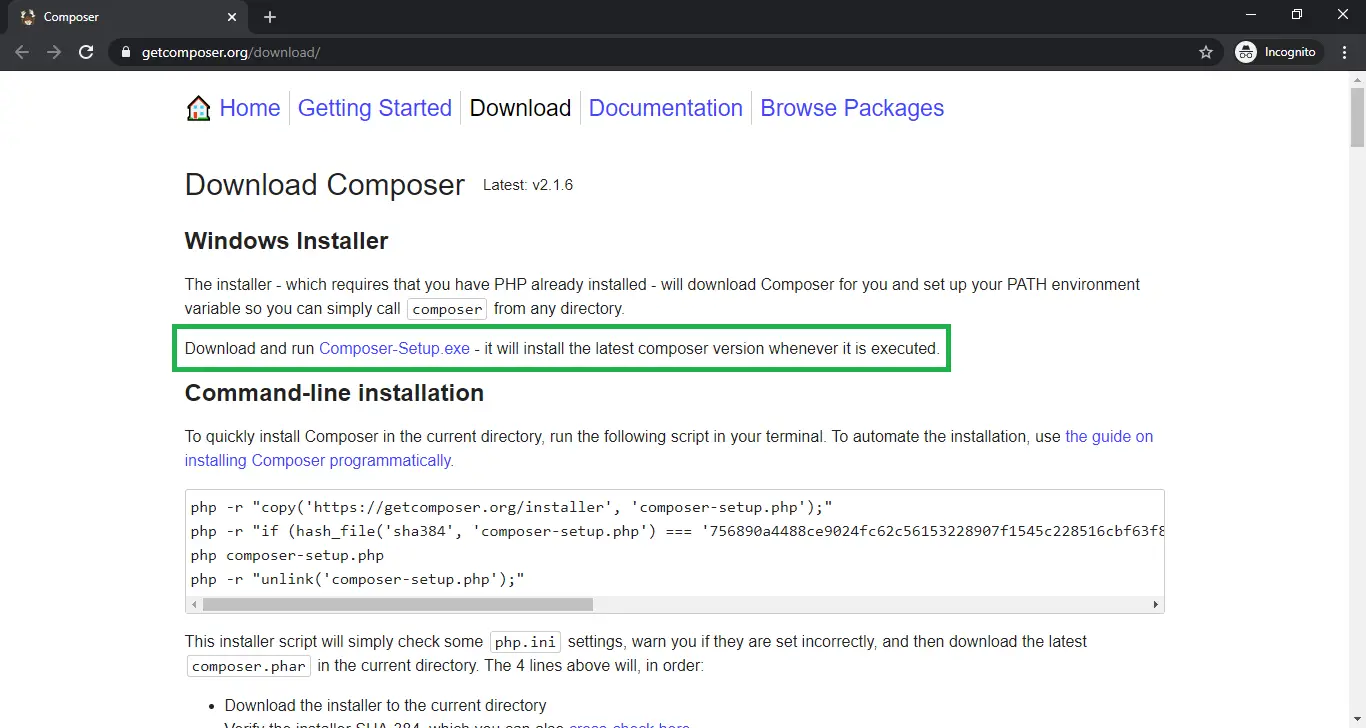
- Step 1: Installed the composer and the Laravel dependencies
First, You need to install first the Composer and the Laravel libraries.

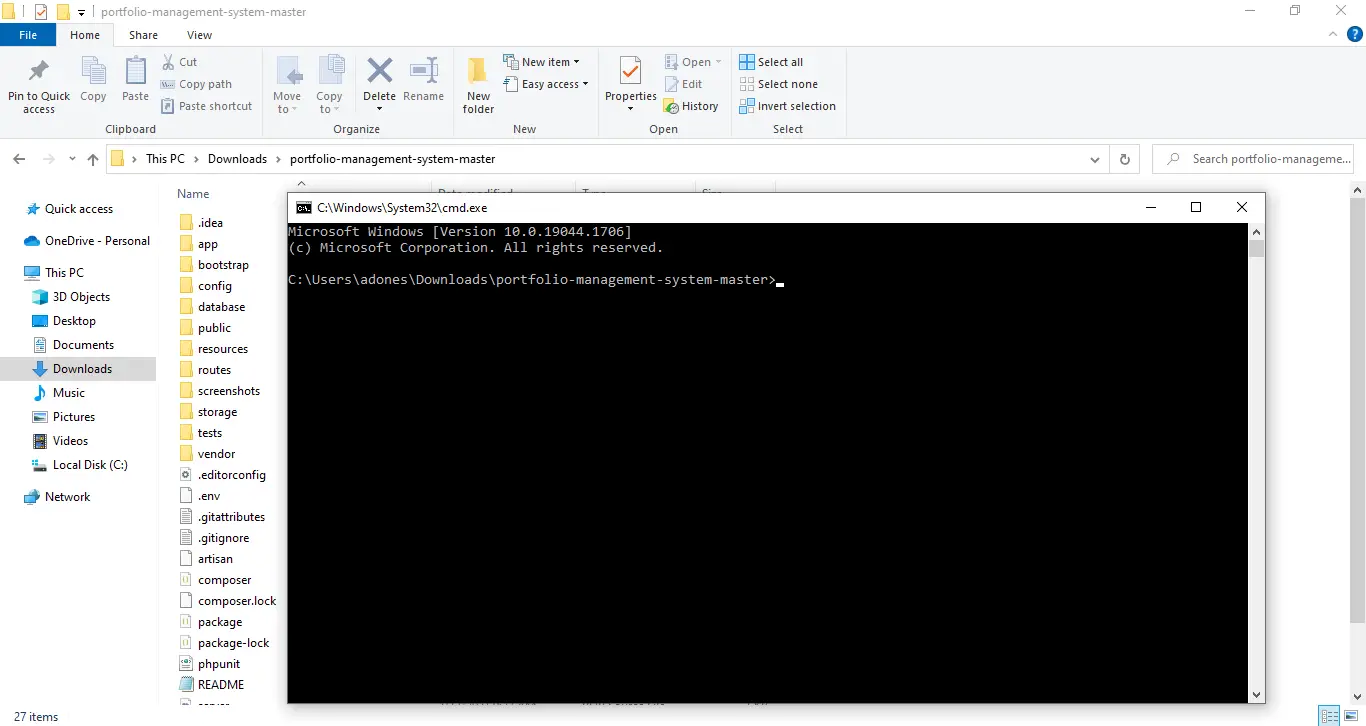
- Step 2: Open Command Prompt
Next, go to the project folder directory then type CMD to open the command prompt.

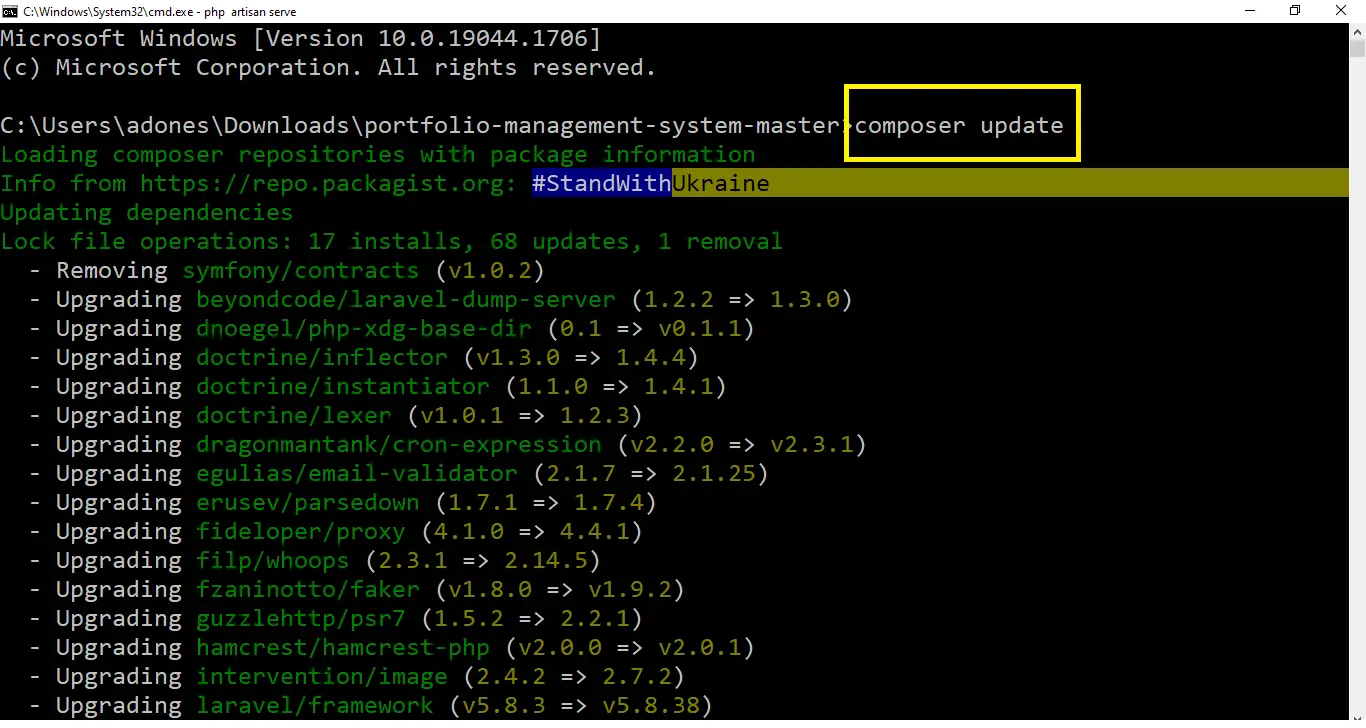
- Step 3: Composer Update
Then, After you finish to installed the composer and the Laravel. now type “composer update” in your command prompt to install the composer dependencies.
- Step 4: php artisan key:generate
After that, then type “php artisan key:generate ” in your command prompt. A command that sets the APP_KEY value in your . env file. By default, Run the following command to have the database tables migrated for you so that you can begin using the system.

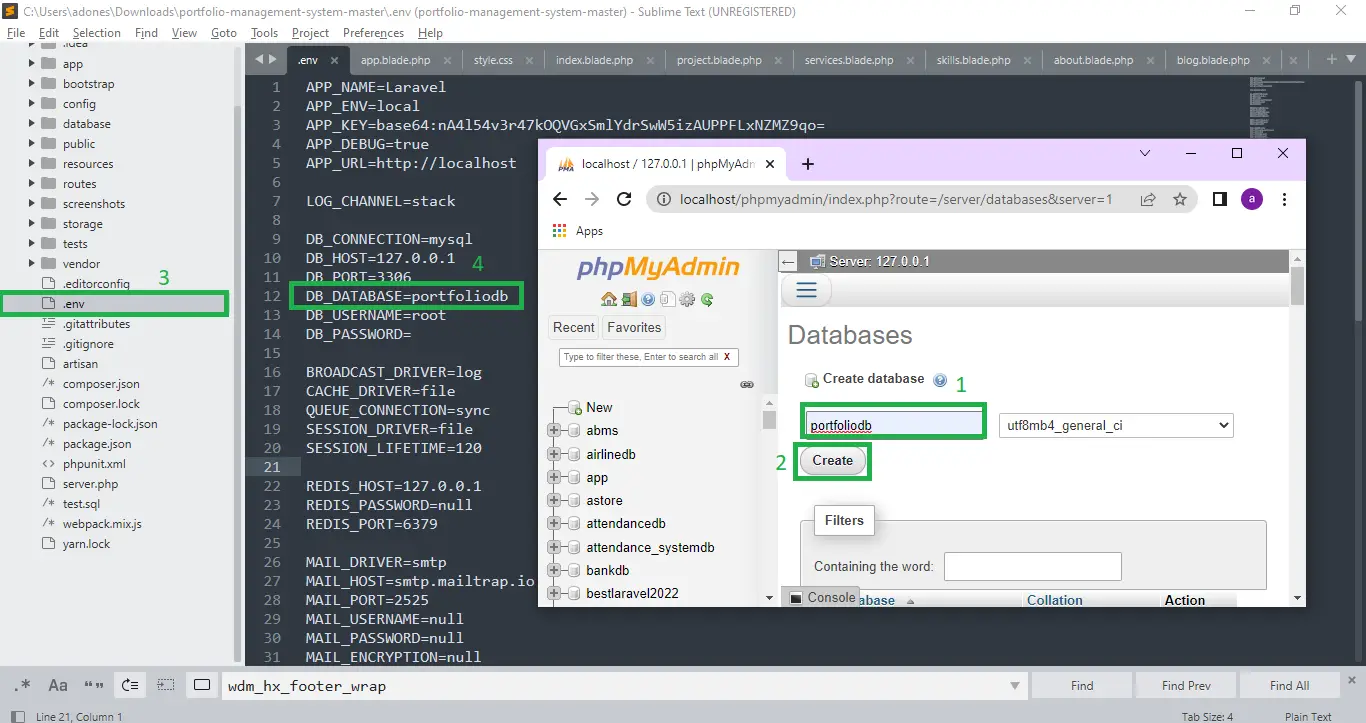
- Step 5: Create Database
After that, To install and run the application correctly. Simply go to phpmyadmin and make a new database. After that, “Be” and rename it to “.env“, then go to connection and modify the default database connection name, only database connection, database username, and password.

- Step 6: php artisan migrate
Lastly, you’ve set up the environment, you’ll need to establish a database configuration for it. Use the following command to create database tables: “php artisan migrate“.

- Step 7: php artisan db:seed
Then, type “php artisan db:seed“, The db:seed command runs the DatabaseSeeder class by default, although it can be overridden to call alternative seed classes. You can, however, use the, class option to execute a single seeder class separately: php artisan db:seed –class=UserTableSeeder.

- Step 8: php artisan serve
Lastly, type “php artisan serve” in your command prompt. The purpose of using PHP artisan serve (PHP built in server) is just for testing and easy starting your project it should not be used in real website deployment.

- Step 9: Copy “http://127.0.0.1:8000/”
Finally, In your browser, type the following code to access your project dashboard.





Download Source Code below
Summary
This system allows you to create a complete portfolio of your work and experiences, as well as a profile.
All of your works will be split into categories, which will be divided further into sections.
This project uses Laravel Portfolio Management System and is fully functional.
It comes with a variety of features to help users manage and maintain their booking guests.
Anyway, if you want to level up your programming knowledge, especially Laravel PHP, try this new article I’ve made for you Awesome Laravel Projects With Source Code Free Download.
Related Articles
- Automated Electronic-Portfolio System using VB.NET
- Portfolio Management System Project in Django with Source Code
Inquiries
If you have any questions or suggestions about Portfolio Management System Project in Laravel with Source Code, please feel free to leave a comment below.
Frequently Asked Questions
How does this Laravel management system work?
Standard Laravel MVC pattern: routes/web.php defines endpoints, controllers handle business logic, Eloquent models map to database tables, Blade templates render the UI. CRUD on the main entity, plus reports and dashboards. Spatie Permission package commonly used for role-based access.
What Laravel and PHP versions does this project require?
Most projects in this batch run on Laravel 9 or 10 with PHP 8.1+. A few older projects need Laravel 7-8 with PHP 7.4. Check the project’s composer.json for the exact requirement. To run any of them: install Composer, run composer install, copy .env.example to .env, generate the app key with php artisan key:generate, migrate the database with php artisan migrate, then php artisan serve.
How do I set up the database for this Laravel project?
Open phpMyAdmin (or your MySQL client), create a new empty database (typical names: laravel_school, laravel_pos, etc.). Edit your .env file: set DB_DATABASE to the new database name, DB_USERNAME and DB_PASSWORD to your local MySQL credentials. Run php artisan migrate –seed to create tables and (if seeders are included) sample data.
Can I use this Laravel project for a BSIT capstone or thesis?
Yes, but extend it. A bare CRUD app is too narrow for full capstone scope. Add: user roles (Spatie Permission), reports/dashboards (Laravel Charts), PDF exports (Laravel Snappy or DomPDF), email notifications (Laravel Mail), and a real domain extension (analytics, audit log, multi-branch support). Pair with Chapter 1-5 documentation matching your panel’s rubric.
Why am I getting ‘Class not found’ or ‘No application encryption key’ errors?
Three common Laravel startup issues: (1) Run composer install to pull dependencies into vendor/. (2) Run php artisan key:generate to create the APP_KEY in .env (required for cookies, sessions, and encrypted fields). (3) Run composer dump-autoload after adding new classes manually. If migrations fail with ‘Specified key was too long’: add Schema::defaultStringLength(191) to AppServiceProvider::boot().
Where can I find more Laravel projects with source code?
Browse the Laravel Projects hub for the full library. For broader PHP capstones see PHP Projects (300+ vanilla PHP + MySQL systems). For Python full-stack alternatives see Django Projects. For BSIT-focused capstone idea lists see 150 Best Capstone Project Ideas.