
Laravel Stock Management System Project with Source Code
This Stock Management System Project in Laravel is built with PHP, CSS, Bootstrap, JavaScript, and the Laravel Framework.
The project has an admin side and a user side from which a user may view the transaction, and can add stock, and other information.
In the management of this system, the administrator is play an important roles in this system.
In this project, the user is responsible for all of the key functions.
Manage hospital assets and stock: see for one hospital, with a superadmin managing all hospitals, and be warned when there are low amounts left, as well as review transaction history.
Description of Stock Management System Project with Source Code
When it comes to the functionality of the Laravel stock management system, the user can simply view transactions and add stock. Hospitals, users, roles, stocks, assets, and transactions may all be managed by the admin.
It also includes user management for convenient system administration.
What is Laravel?
Laravel is a web application framework with a syntax that is both expressive and beautiful.
To be really meaningful, we believe development must be a fun and creative experience.
Laravel aims to make development easier by simplifying processes like authentication, routing, sessions, queueing, and caching that are typical in most online applications.
Project Details: Laravel Stock Management System Project with Source Code
| ABOUT PROJECT | PROJECT DETAILS |
|---|---|
| Project Name : | Stock Management System in Laravel |
| Project Platform : | Php |
| Programming Language Used: | Laravel Language |
| Developer Name : | itsourcecode.com |
| IDE Tool (Recommended): | Sublime |
| Project Type : | Web Application |
| Database: | MySQL |
| Upload Date and Time: |
Screenshots Module in Stock Management System in Laravel

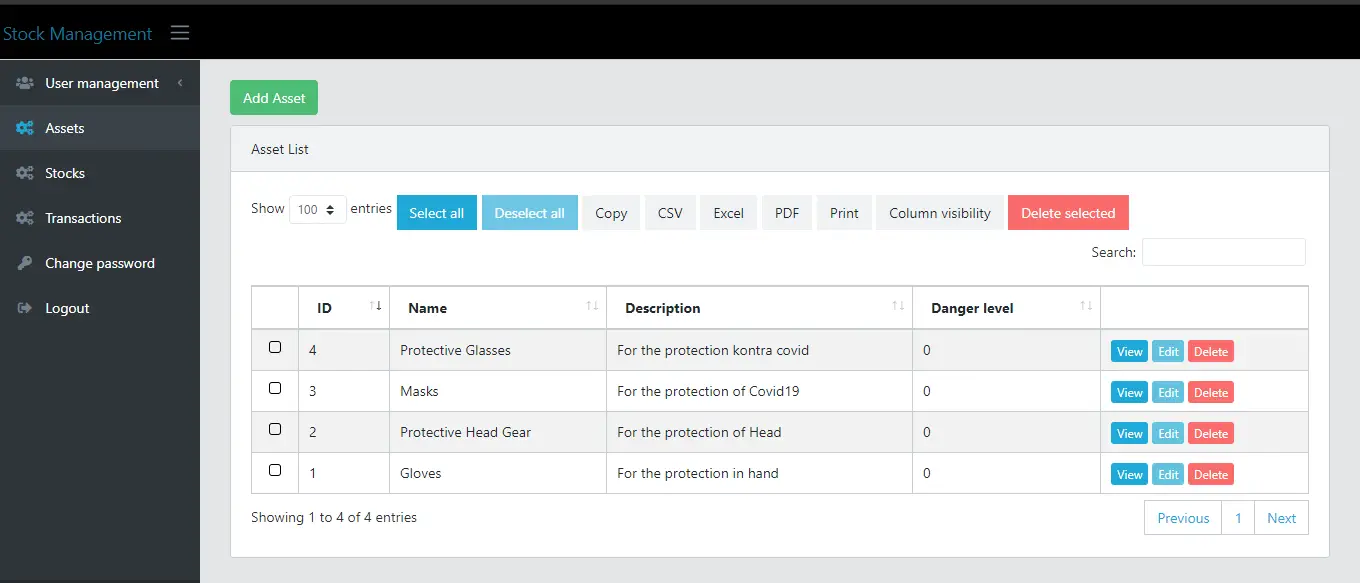
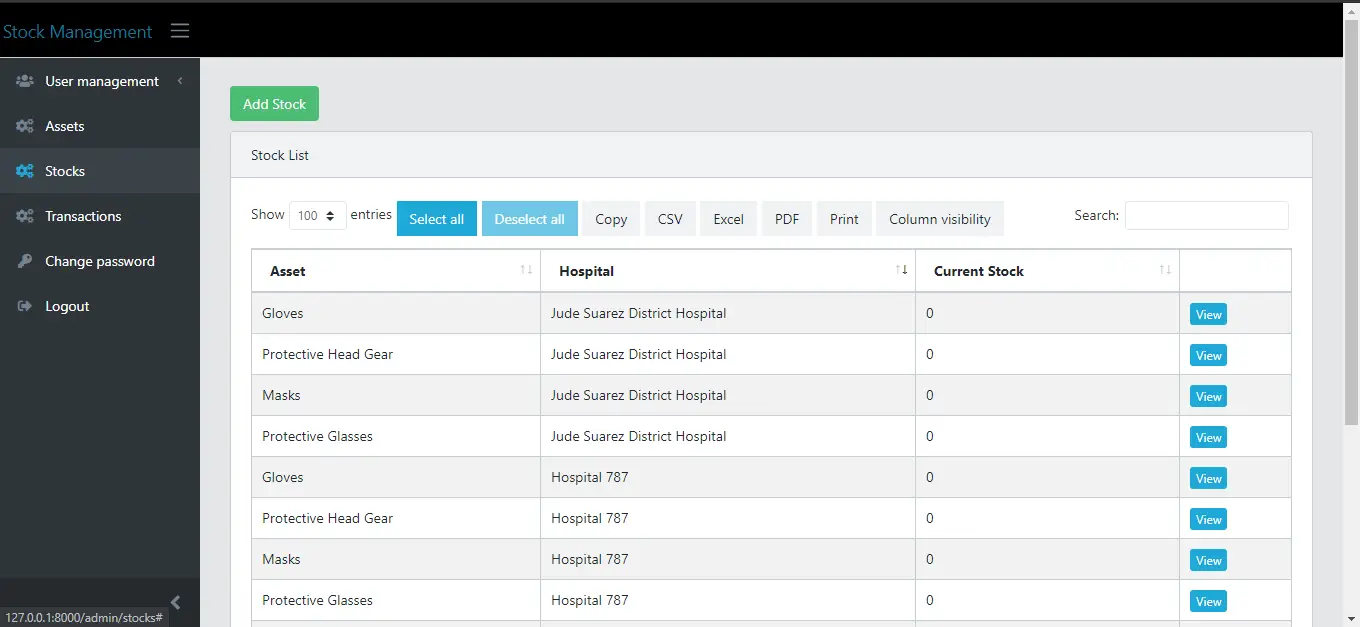
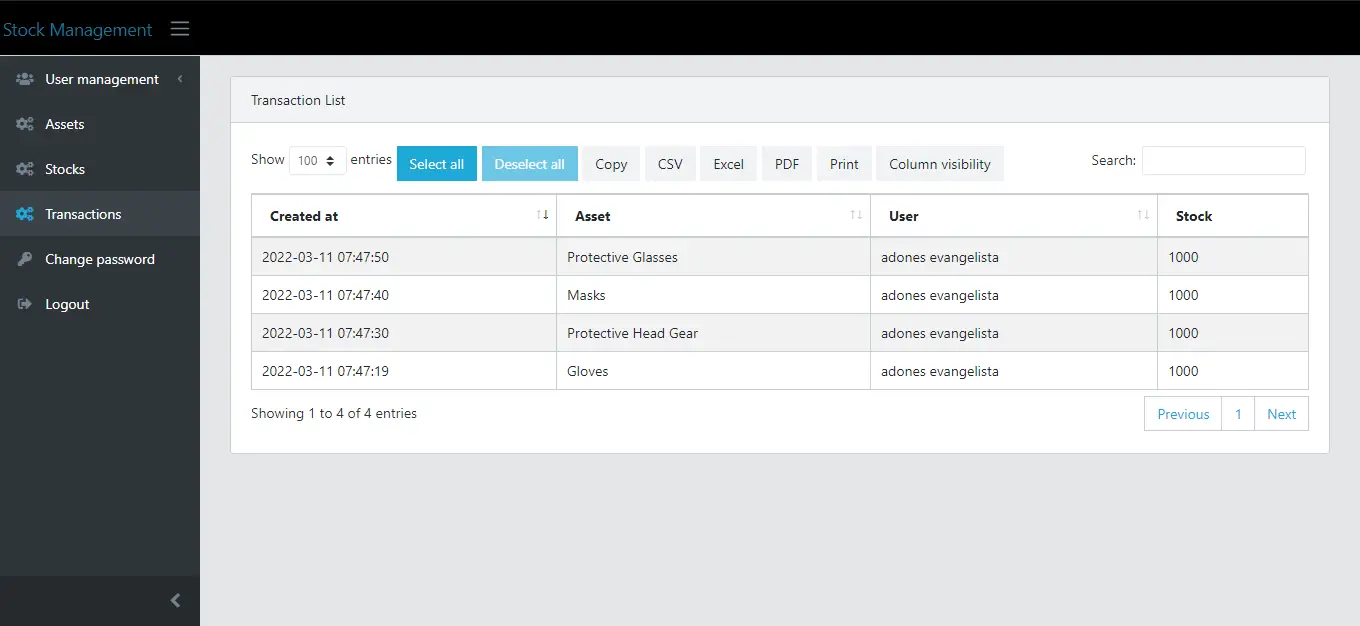
Admin Features in Stock Management System in Laravel
- Login Module – This is the module where the warehouse management system administrator inserts their credentials to obtain access to the data.
- Dashboard Module – After logging in, system administrators are automatically directed to this module.
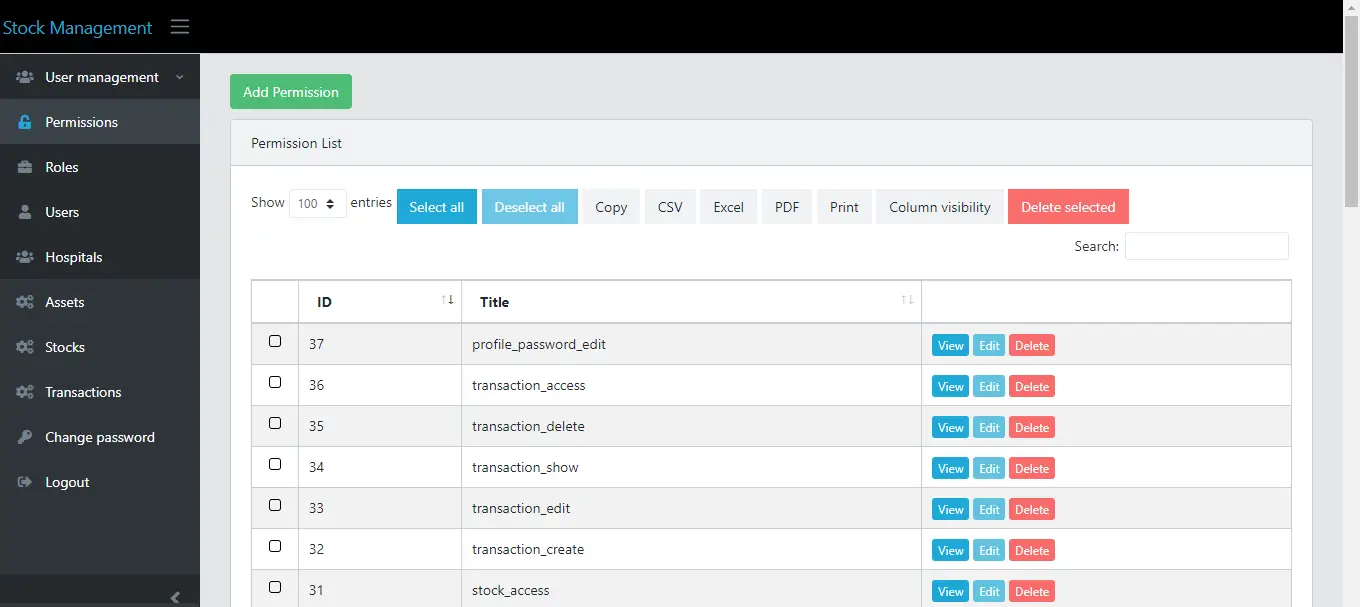
- Manage Permission Module – In this module the admin can add, edit, view and delete permission information. Also the admin can export through csv, excel, pdf, and allows to print the table of permission.
- Manage Roles Module – In this module the admin can add, edit, view and delete roles information. Also the admin can export through csv, excel, pdf, and allows to print the table of roles.
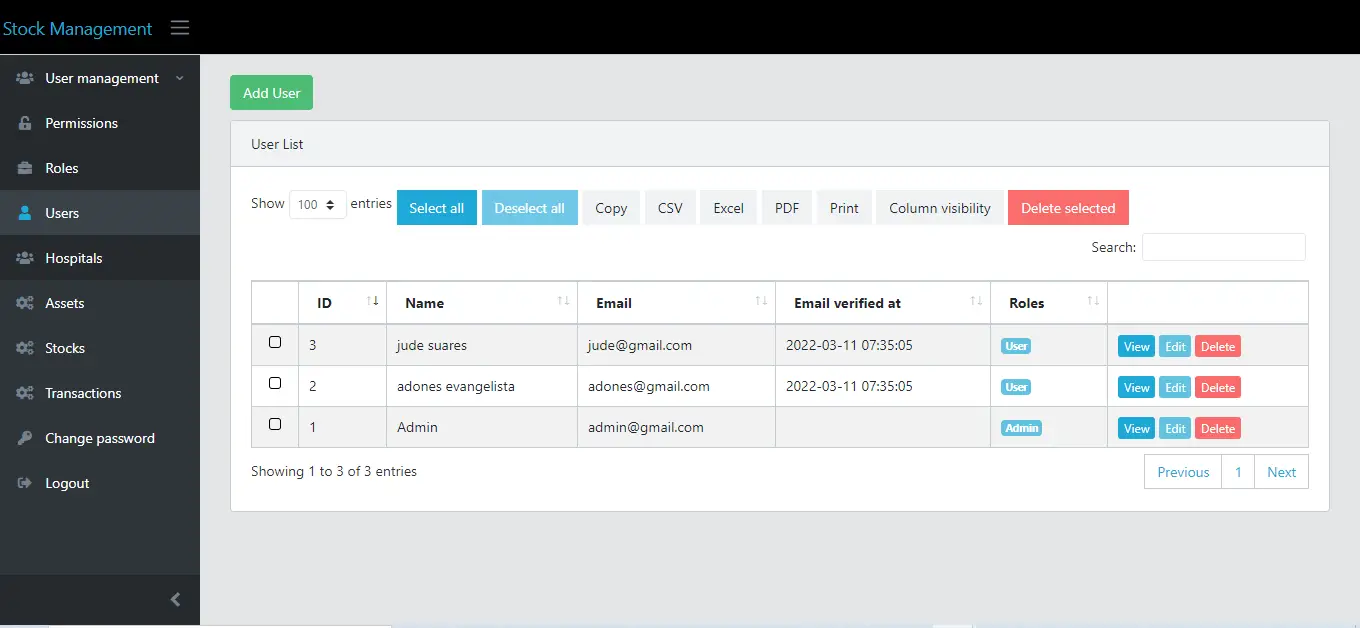
- Users Module – This module the admin can add, edit, view and delete users information. Also the admin can export through csv, excel, pdf, and allows to print the table of users.
- Manage Hospital Module – In this module the admin can add, edit, view and delete hospital information. Also the admin can export through csv, excel, pdf, and allows to print the table of hospitals.
- Manage Assets Module – In this module the admin can add, edit, view and delete assets information. Also the admin can export through csv, excel, pdf, and allows to print the table of assets.
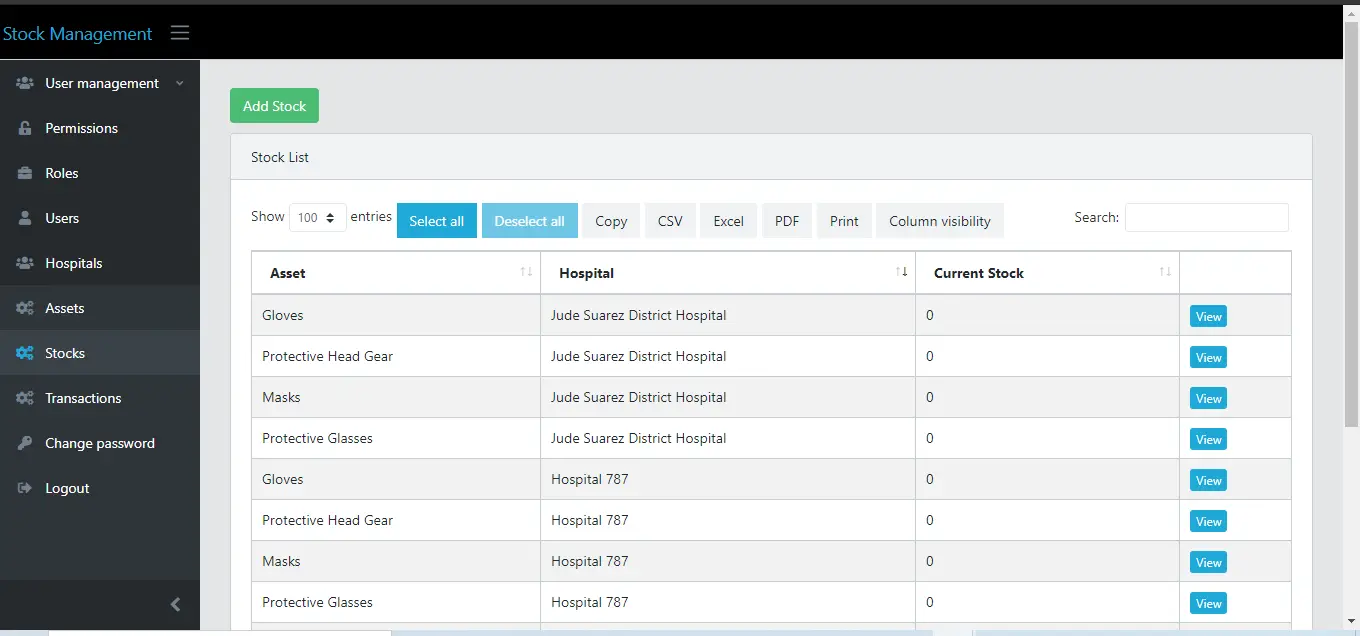
- Stocks Module – The admin can add, edit, view and delete stocks information. Also the admin can export through csv, excel, pdf, and allows to print the table of stocks.
- Transaction Module – The admin can view transaction information. Also the admin can export through csv, excel, pdf, and allows to print the table of transaction
Laravel Stock Management System Steps On How To Run The Project
Time needed: 5 minutes
Here’s the step’s on how to run a Laravel Stock Management System with Source Code
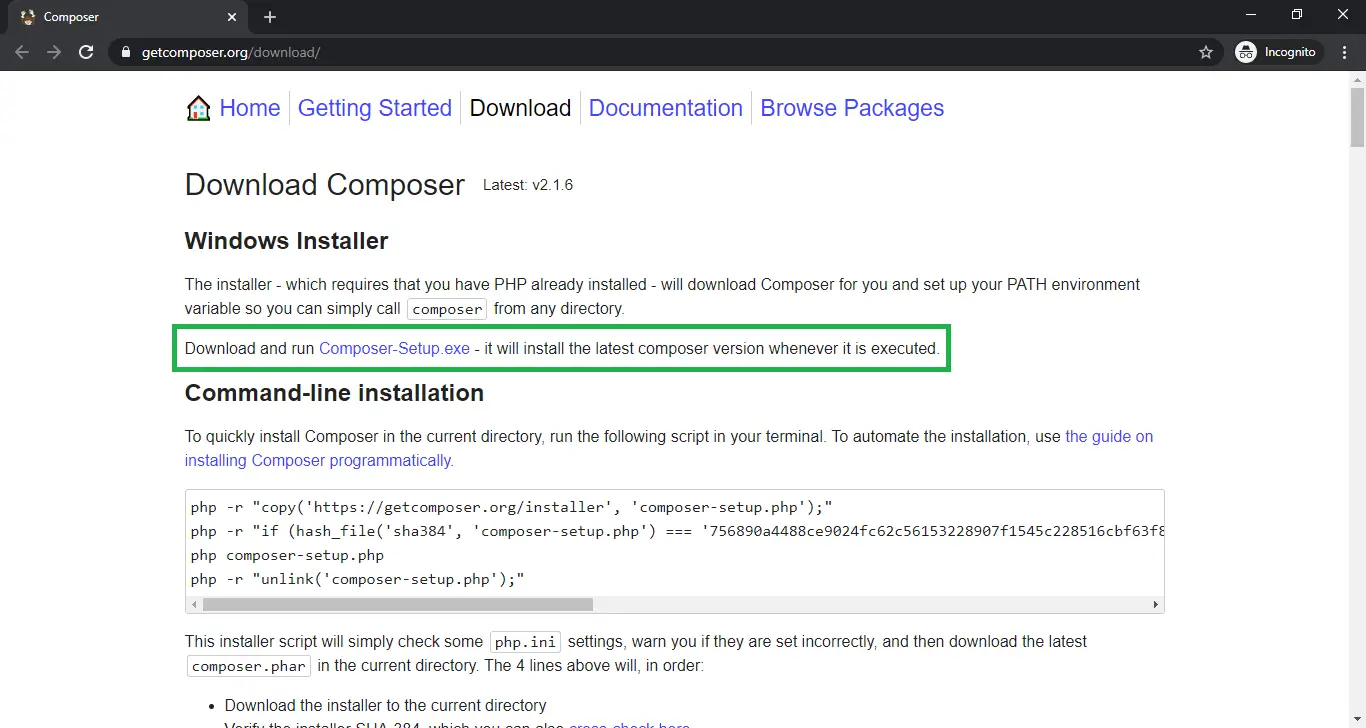
- Step 1: Installed the composer and the Laravel dependencies
First, You need to install first the Composer and the Laravel libraries.

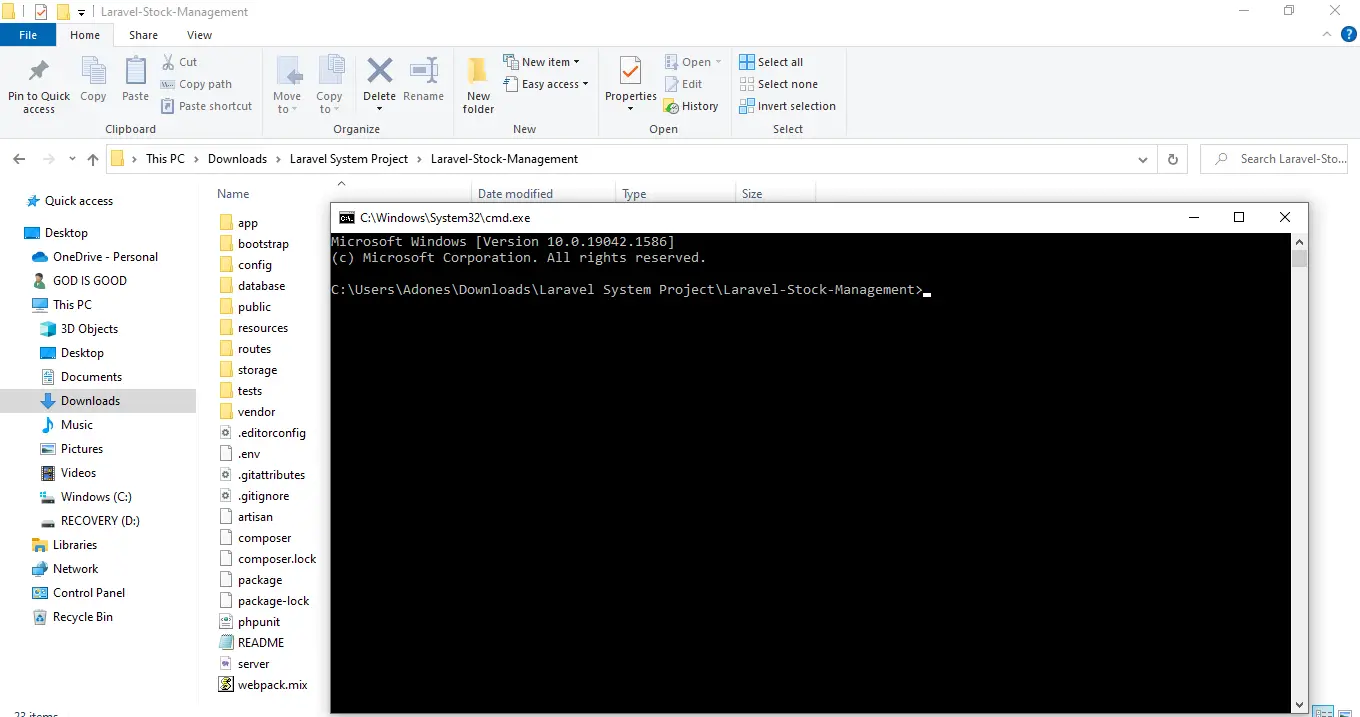
- Step 2: Open Command Prompt
Next, go to the project folder directory then type CMD to open the command prompt.

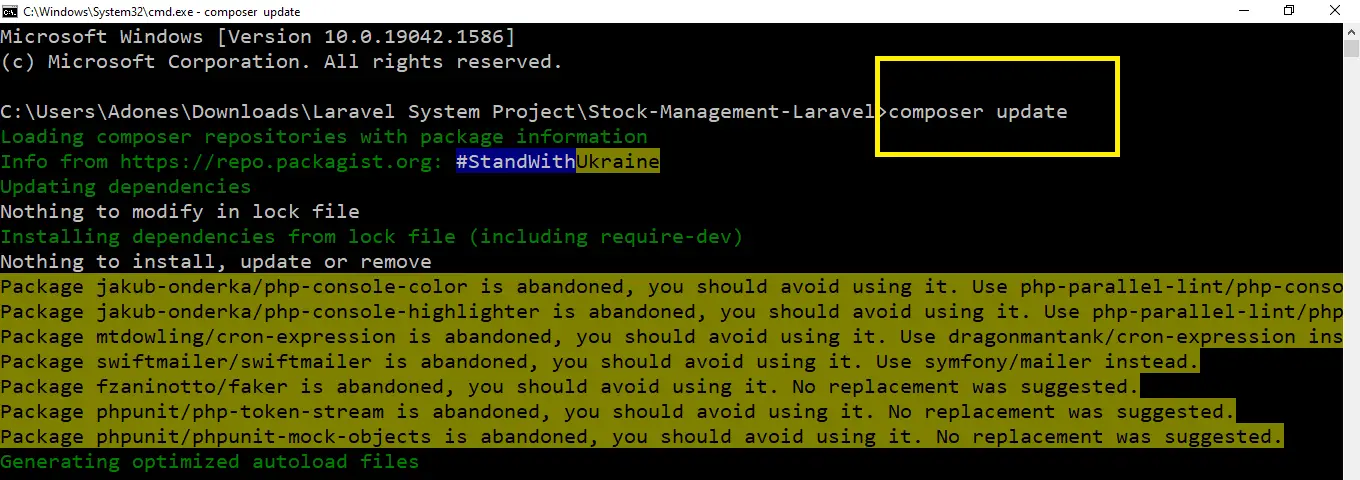
- Step 3: Composer Update
Then, After you finish to installed the composer and the Laravel. now type “composer update” in your command prompt to install the composer dependencies.

- Step 4: php artisan key:generate
After that, then type “php artisan key:generate ” in your command prompt. A command that sets the APP_KEY value in your . env file. By default, Run the following command to have the database tables migrated for you so that you can begin using the system.

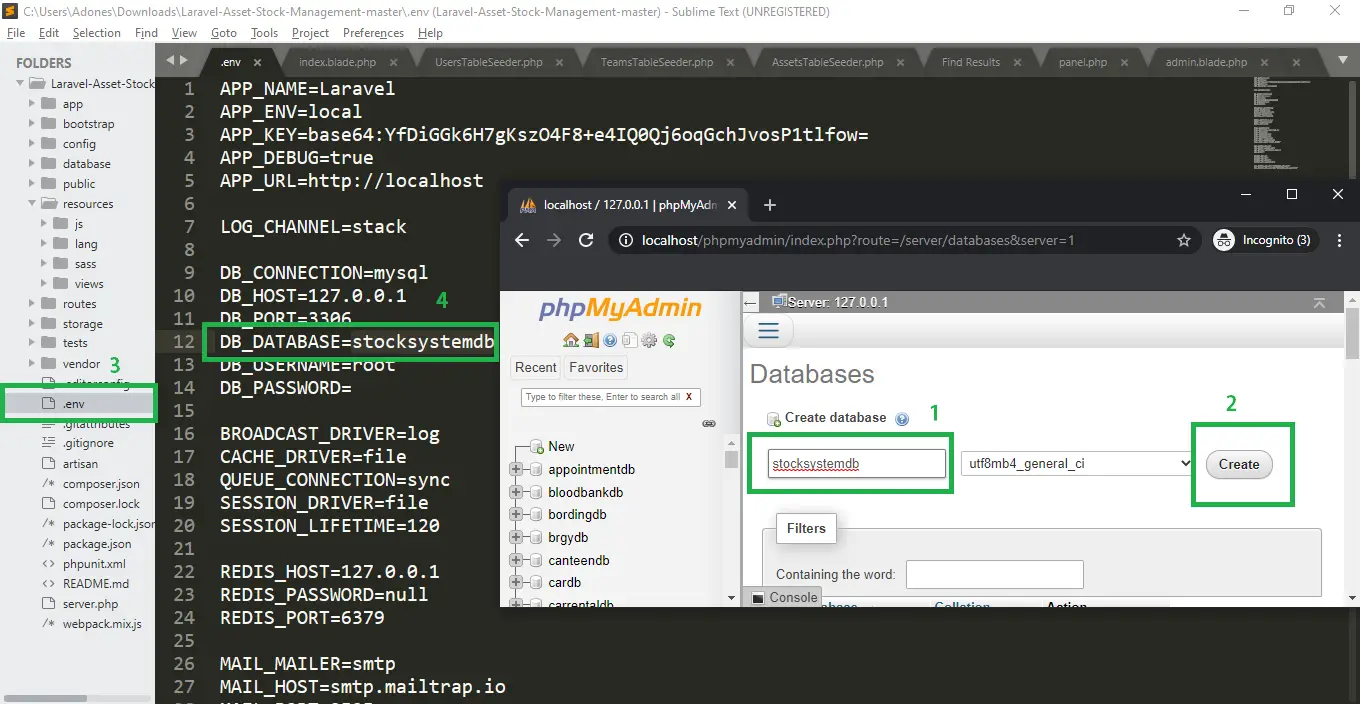
- Step 5: Create Database
After that, To install and run the application correctly. Simply go to phpmyadmin and make a new database. After that, “Be” and rename it to “.env“, then go to connection and modify the default database connection name, only database connection, database username, and password.

- Step 6: php artisan migrate
Lastly, you’ve set up the environment, you’ll need to establish a database configuration for it. Use the following command to create database tables: “php artisan migrate“.

- Step 7: php artisan serve
Lastly, type “php artisan serve” in your command prompt. The purpose of using PHP artisan serve (PHP built in server) is just for testing and easy starting your project it should not be used in real website deployment.

- Step 8: Copy “http://127.0.0.1:8000/”
Finally, In your browser, type the following code to access your project dashboard.




Download Source Code below
Summary
The design of this project is simple enough that the user will have no problems working on it.
This PHP and Laravel system assists the user in keeping track of stocks and items.
To complete this project, you must have XAMPP and Composer installed on your computer (for Windows).
The PHP system with source code is available for free download; however, it should only be used for instructional reasons!
Anyway, if you want to level up your programming knowledge, especially Laravel PHP, try this new article I’ve made for you Awesome Laravel Projects With Source Code Free Download.
Related Articles
- Stock Management System Project in C with Source Code
- Stock Management System Project in Django with Source Code
Inquiries
If you have any questions or suggestions about Laravel Stock Management System with Source Code, please feel free to leave a comment below.
Official documentation
Frequently Asked Questions
How does this Laravel stock management system work?
Similar to inventory: tracks per-item quantity on hand, handles in/out movements, supports multiple warehouses or branches. Lighter scope than full inventory + sales combo. Foundation for adding POS or purchasing modules as capstone extensions.
What Laravel and PHP versions does this project require?
Most projects in this batch run on Laravel 9 or 10 with PHP 8.1+. A few older projects need Laravel 7-8 with PHP 7.4. Check the project’s composer.json for the exact requirement. To run any of them: install Composer, run composer install, copy .env.example to .env, generate the app key with php artisan key:generate, migrate the database with php artisan migrate, then php artisan serve.
How do I set up the database for this Laravel project?
Open phpMyAdmin (or your MySQL client), create a new empty database (typical names: laravel_school, laravel_pos, etc.). Edit your .env file: set DB_DATABASE to the new database name, DB_USERNAME and DB_PASSWORD to your local MySQL credentials. Run php artisan migrate –seed to create tables and (if seeders are included) sample data.
Can I use this Laravel project for a BSIT capstone or thesis?
Yes, but extend it. A bare CRUD app is too narrow for full capstone scope. Add: user roles (Spatie Permission), reports/dashboards (Laravel Charts), PDF exports (Laravel Snappy or DomPDF), email notifications (Laravel Mail), and a real domain extension (analytics, audit log, multi-branch support). Pair with Chapter 1-5 documentation matching your panel’s rubric.
Why am I getting ‘Class not found’ or ‘No application encryption key’ errors?
Three common Laravel startup issues: (1) Run composer install to pull dependencies into vendor/. (2) Run php artisan key:generate to create the APP_KEY in .env (required for cookies, sessions, and encrypted fields). (3) Run composer dump-autoload after adding new classes manually. If migrations fail with ‘Specified key was too long’: add Schema::defaultStringLength(191) to AppServiceProvider::boot().
Where can I find more Laravel projects with source code?
Browse the Laravel Projects hub for the full library. For broader PHP capstones see PHP Projects (300+ vanilla PHP + MySQL systems). For Python full-stack alternatives see Django Projects. For BSIT-focused capstone idea lists see 150 Best Capstone Project Ideas.

Adones Evangelista
Programmer & Technical Writer at PIES IT Solution
Adones Evangelista is a programmer and writer at PIES IT Solution, author of over 900 tutorials and error-fix guides at itsourcecode.com. Specializes in JavaScript, Django, Laravel, and Python error debugging covering ValueError, TypeError, AttributeError, ModuleNotFoundError, and RuntimeError, plus C/C++ and PHP capstone projects for BSIT students.
Expertise: JavaScript · Python · Django · Laravel · Error Debugging · C/C++ · View all posts by Adones Evangelista →
what is the password of admin
just run “php artisan db:seed”
Hi there , What is the password to unzip the source code?
itsourcecode.com
Password: itsourcecode.com
Hello Bem, Need help with migration even i create account from sql its forbidden.
Hello,
Need help after migration all data in the sql was clear.
Cannot login the admin.
add this command line to login in the admin.
“php artisan db:seed”
Thanks for the fast response its works.
God Bless.
What the hospital mean ?
Is it location ?
What do you mean hospital?
when i try it i got that Exception
SQLSTATE[23000]: Integrity constraint violation: 1062 Duplicate entry ‘1’ for key ‘PRIMARY’ (SQL: insert into `permissions` (`id`, `title`) values (1, user_management_access), (2, permission_create), (3, permission_edit), (4, permission_show), (5, permission_delete), (6, permission_access), (7, role_create), (8, role_edit), (9, role_show), (10, role_delete), (11, role_access), (12, user_create), (13, user_edit), (14, user_show), (15, user_delete), (16, user_access), (17, asset_create), (18, asset_edit), (19, asset_show), (20, asset_delete), (21, asset_access), (22, team_create), (23, team_edit), (24, team_show), (25, team_delete), (26, team_access), (27, stock_create), (28, stock_edit), (29, stock_show), (30, stock_delete), (31, stock_access), (32, transaction_create), (33, transaction_edit), (34, transaction_show), (35, transaction_delete), (36, transaction_access), (37, profile_password_edit))
It is ok. Because I think you repeat twice in running php artisan migrate so thats why it will create the same database
Bonjour,
comment connecté pour ce projet?