

This article will walk you through the process of installing a Vue.JS Book Management Information System. Vue JS, a JavaScript framework used for front-end development, is used in this web application.
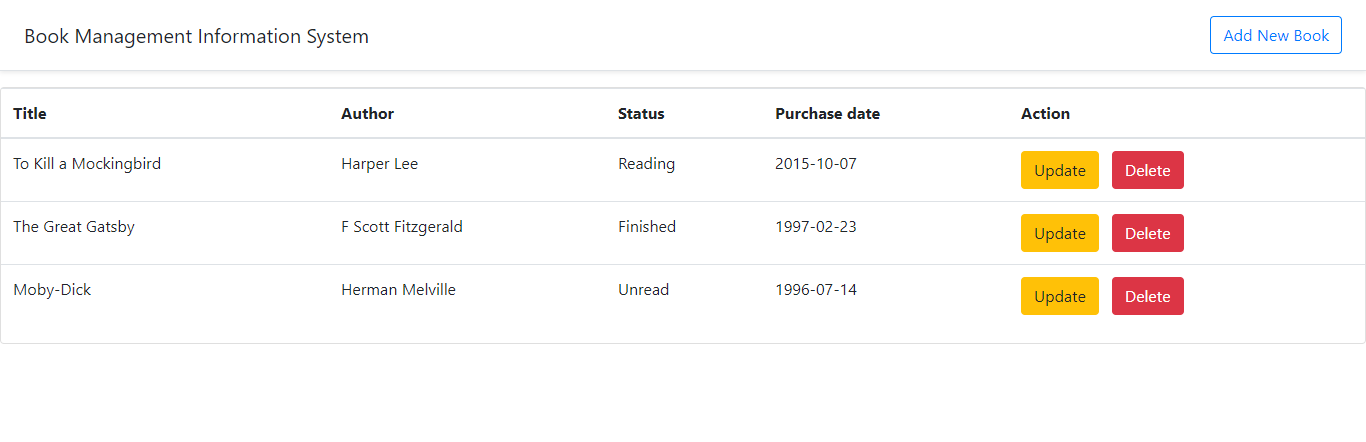
The book management information system stores a book’s title, author, status, and publication date.
The use of a JavaScript framework for a better user interface distinguishes this project. Vue can also be used with other frameworks and tools such as CSS, TypeScript, and others.
What is a Web Application (Web App)
A web application is software that runs on a web server. Web apps, as opposed to desktop apps, use web browsers and other web technologies to perform tasks.
What is Vue.JS
Vue.js, also known as Vue, is a JavaScript framework designed for front-end developers. It is used to create single-page applications with beautiful user interfaces.
Vue is used by many businesses on their websites. Xiaomi, Alibaba, and GitLab are a few examples.
Book Management Information System in Vue.JS: How to Install the Project
This web app is simple to set up! Simply follow the instructions and you’ll be done in no time!
Time needed: 5 minutes
- Install and Run XAMPP
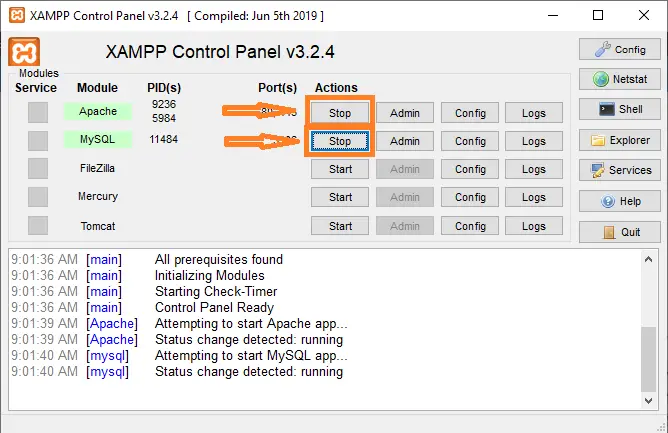
The first step is to set up XAMPP. You will be able to run a local web server on your computer as a result of this. After installation, start XAMPP as well as Apache and MySQL.

- Open the project and locate “project.json” file
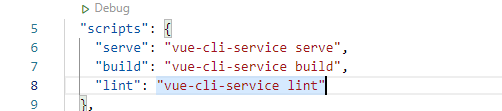
The next step is to locate the JSON file containing the instructions for starting the web app. Use your preferred code or text editor to open this file. Locate the “script” block. This will provide you with the correct command to begin it.

- Open the Command Prompt
After that you identified the “start” command, Open your CMD terminal and change the directory to the project folder. You can do this by entering “cd “ and the project address.
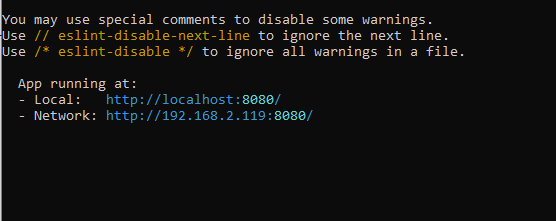
Press enter. Then, type in the command. In this case, the command is “npm run serve”. You will know that it is successful when you are instructed to open the localhost.

- Open the Web Application on your browser.
You are now ready to launch the web application! In the web browser, paste the link. The result is as follows:

Conclusion
That’s all there is to it! Vue.JS Book Management Information System in Vue.JS is adaptable and can be used in conjunction with other frameworks. These projects are excellent for honing your skills in web application programming.
| ABOUT PROJECT | PROJECT DETAILS |
|---|---|
| Project Name : | Book Management Information System in Vue.JS |
| Project Platform : | Vue.JS |
| Programming Language Used: | php,javascript,html,css |
| Developer Name : | itsourcecode.com |
| IDE Tool (Recommended): | Visual Studio 2019 |
| Project Type : | Web Application |
| Database: | MySQL |
Source Code Download
Click the button below to download the project.
How Book Management Information System in Vue.JS works
This JavaScript project demonstrates common patterns used across web applications. The code is intentionally small so it can be understood in a few reading sessions and extended for a real project.
Extending Book Management Information System in Vue.JS for a capstone project
- Persist data. Add localStorage or a Node.js backend so state survives page reloads.
- Style it. Add Bootstrap, Tailwind, or a custom design so the project looks polished for defense.
- Add authentication. Login and role-based access control for multi-user scenarios.
- Deploy live. Push to GitHub Pages, Netlify, or Vercel so panel members can access it from any device.
- Test on mobile. Use Chrome DevTools device mode to confirm the layout works on phones.
Working code snippet
// A minimal JavaScript pattern for Book Management Information System in Vue.JS
(function () {
  const state = { items: [] };

  function add(item) {
    state.items.push(item);
    render();
  }

  function render() {
    const container = document.getElementById("output");
    container.innerHTML = state.items.map(x => `<li>${x}</li>`).join("");
  }

  document.getElementById("addBtn").addEventListener("click", () => {
    const input = document.getElementById("input");
    if (input.value) {
      add(input.value);
      input.value = "";
    }
  });
})();
Best practices for this JavaScript pattern
- Use const and let. Never var. It has function-scope surprises that trip up beginners.
- Wrap in an IIFE or module. Prevents polluting the global namespace.
- Attach one event listener per action. Not multiple listeners on the same button.
- Separate state from rendering. Update state first, then call render(). Do not mutate DOM directly from event handlers.
Deployment checklist for this JavaScript project
Before showing the project to a client, panel member, or user, run through this checklist:
- Minify the JavaScript. Use esbuild or terser to shrink the file for faster page load.
- Add a .gitignore. Exclude node_modules, .env, and IDE folders before committing to GitHub.
- Set up a README. Explain what the project does, how to install, and how to contribute.
- Add screenshots. A picture beats a paragraph when someone lands on your repo.
- Enable HTTPS. GitHub Pages and Netlify give free HTTPS by default; use it.
- Test in real browsers. Chrome, Firefox, Safari, Edge — not just the one you develop in.
- Check mobile layout. Chrome DevTools device mode simulates common phones and tablets.
Official documentation
Frequently Asked Questions
How does this JavaScript management system work?
Standard JavaScript frontend (HTML/CSS/JS or Vue) with backend via Node.js+Express+MongoDB or PHP+MySQL. CRUD on main entity, role-based access, reports.
What JavaScript runtime or browser does this project need?
Pure frontend projects (vanilla JS, Vue, jQuery) run in any modern browser (Chrome 90+, Firefox 88+, Safari 14+, Edge 90+) – no install needed. Node.js projects need Node.js 18 LTS or 20 LTS (download from nodejs.org). Run: npm install in project folder, then npm start or node app.js.
How do I run this JavaScript project locally?
For pure HTML/CSS/JS: open index.html in your browser, or use VS Code Live Server extension for auto-reload. For Vue projects: npm install then npm run dev (Vite) or npm run serve (Vue CLI). For Node.js: npm install then npm start. For projects with backend (PHP+MySQL): place in XAMPP htdocs, start Apache + MySQL, browse to localhost/project.
Can I use this JavaScript project for a BSIT capstone or thesis?
Yes. Extend it: add user authentication (JWT for SPA, sessions for traditional), role-based access, real backend (Node.js+Express+MongoDB or PHP+MySQL), responsive design (Bootstrap/Tailwind), PDF exports (jsPDF), real-time features (Socket.IO). Pair with Chapter 1-5 documentation matching your panel’s rubric.
Why am I getting ‘Uncaught ReferenceError’ or ‘Cannot read property of undefined’?
Three common JavaScript issues: (1) Script tag placement wrong, put
Related Articles
- Simple CRUD Web App in VueJS
- Attendance Management System in JavaScript
- Examination Apps in JavaScript
- Market Billing System in JavaScript
- Movie Management System in JavaScript
- Expense Tracker in JavaScript with Source Code
A web application is a program that run on a web server. In comparison to desktop apps where they run inside an operating system, Web apps run using web browsers and other web technologies to perform tasks.
Vue.js or Vue is a JavaScript framework for front-end developers. It is used to create single-page applications with stunning UI. Many companies use Vue on their websites. Some of them are Xiaomi, Alibaba, and GitLab.
Looking for similar projects or tutorials?
Search for more source code, capstone projects, or programming tutorials